

Tightening Skin After Losing Weight: What Affects Skin Elasticity

Updated: 4 days ago
Loose skin after weight loss depends on more than the number on the scales. Age, genetics, how quickly and how much weight you lose, and how long your skin has been stretched all affect its ability to recoil. Tightening skin after losing weight may involve non-surgical treatments for mild laxity, while surgery is generally more effective when substantial excess skin remains.
It’s understandable to expect skin to tighten as your body changes, but its response varies from person to person. This article explains why skin can remain loose, which factors influence elasticity, and how laser treatments compare with surgery, including the different roles each may play.
You’ll also learn how treatments that use energy may support a collagen response, why changes develop gradually, and where RF Skin Tightening fits among the options available at Body Therapist.
Table of Contents
Why Does Skin Become Loose After Weight Loss?
Loose skin develops when stretched skin cannot fully contract as body volume decreases. The result depends on how much weight you lose, your age and genetics, and how long the skin was stretched.
Causes of Skin Laxity
Skin laxity is excess skin that remains after the tissue beneath it shrinks. Age and genetics influence how well skin retracts, while rapid weight loss gives it less time to adjust gradually. A steady pace of about 0.5 to 1 kg per week allows more time for adaptation, but doesn’t determine the outcome. This matters because sagging can reflect several factors, not just the speed of weight loss.
Effects of Substantial Weight Loss
Substantial weight loss can leave skin with more space than the reduced body volume can support. Losing 100 pounds or more is one factor associated with greater looseness, although skin quality and other individual factors also matter. There’s no single weight-loss threshold that predicts sagging skin. For someone losing 50 pounds, the result can also depend on the proportion of starting body weight lost and how long that weight was carried.
Skin Elasticity and Recovery
Elasticity describes the skin’s capacity to stretch and return towards its earlier shape. Slight looseness after moderate weight loss may retract on its own as the body adjusts, but substantially stretched skin typically won’t fully retract. Age, genetics and the duration of stretching affect this response. Gradual weight loss gives tissue more time to adapt, while rapid change can outpace that adjustment. These differences help explain why skin responds differently even after similar weight loss.
Loose Skin Versus Subcutaneous Fat
Loose skin is a fold of tissue that hangs or creases; subcutaneous fat is the layer of fat beneath the skin. The distinction matters because an area that appears soft or sagging may contain residual fat rather than excess skin alone. If you can pinch more than a few millimetres, the appearance of looseness may be due to subcutaneous fat. This is a useful clue, not a definitive diagnosis, and the two can occur together after weight loss.
Choosing between non-surgical treatment and surgery
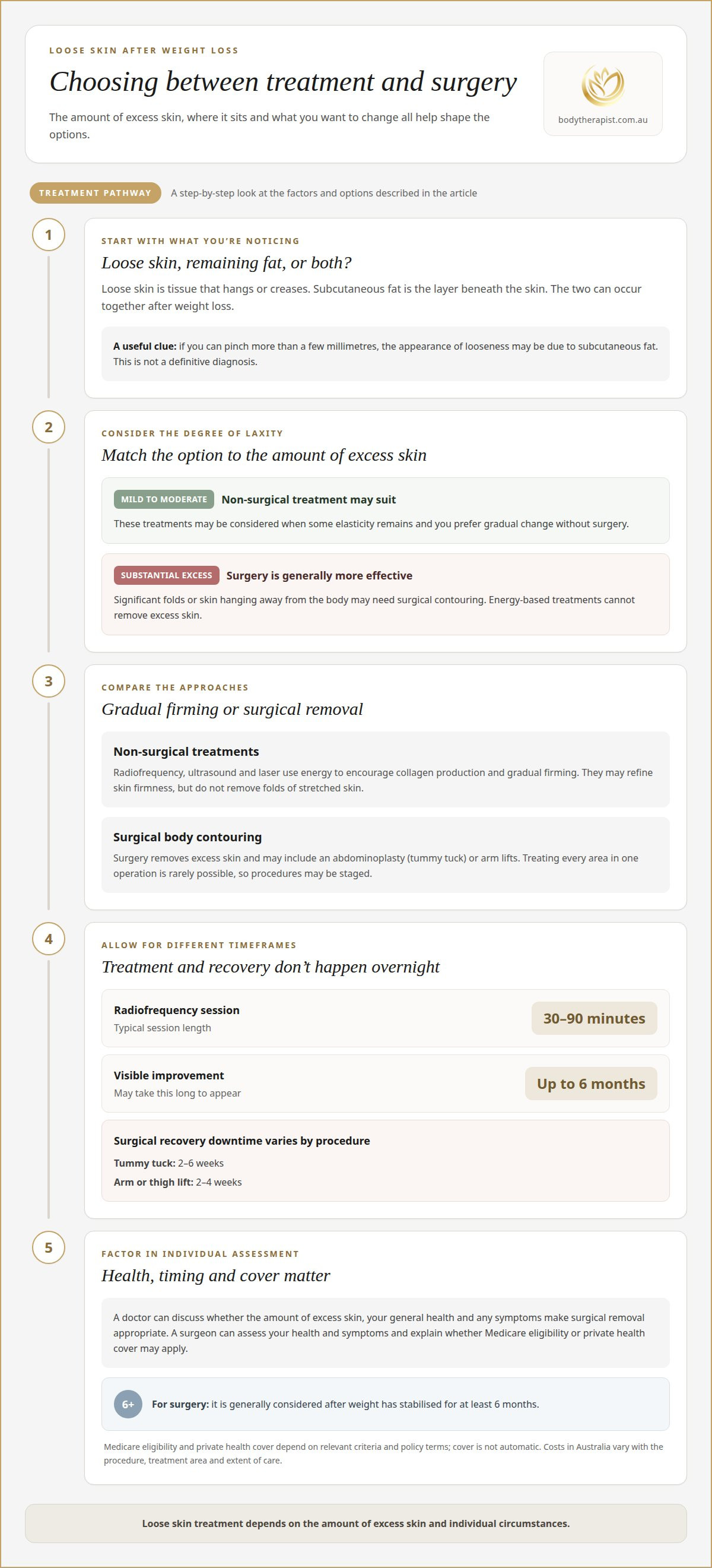
The right approach depends on how much excess skin remains, where it is and what you want to change. Non-surgical treatments may suit mild laxity; surgery removes skin that hangs in substantial folds.
Matching Treatment to Skin Laxity
Skin laxity describes how far skin hangs or fails to retract after weight loss. Mild to moderate laxity, with some elasticity remaining, may respond to gradual non-surgical treatment. Significant folds or skin hanging away from the body may need surgical contouring, as energy-based treatments cannot remove excess skin. Surgery is generally considered after weight has stabilised for at least 6 months.
In Australia, a surgeon can assess your health and symptoms, then explain whether Medicare eligibility or private health cover may apply. Cover depends on the relevant criteria and policy terms, so it isn’t automatic. Body contouring surgery removes excess skin and may include procedures such as an abdominoplasty, or tummy tuck, and arm lifts. Treating every area in one operation is rarely possible, so procedures may be staged.
Professional Skin-Tightening Treatments
Professional non-surgical treatments use energy to encourage collagen production and gradual firming. Radiofrequency skin tightening may suit mild to moderate laxity; ultrasound and laser treatments are other options. Radiofrequency sessions typically take 30 to 90 minutes, and improvement can take up to 6 months to appear. These approaches can refine skin firmness, but they don’t surgically remove folds of stretched skin. The RF skin tightening treatment is a non-surgical option for suitable concerns.
Candidates for Non-Surgical Treatment
Non-surgical treatment may suit people with mild to moderate laxity, good skin quality and some elasticity remaining. It may also appeal if you prefer gradual change without surgery. A doctor can discuss whether the amount of excess skin, your general health and any symptoms make surgical removal appropriate. Surgery is more invasive and carries potential risks; recovery varies by procedure. Tummy tuck downtime can range from two to six weeks, while arm or thigh lift downtime can last two to four weeks.
Costs in Australia vary with the procedure, treatment area and extent of care, so there’s no single price for loose-skin treatment. Consider professional guidance if loose skin causes discomfort, affects daily activities or remains a concern.
Factors affecting skin elasticity
Skin elasticity reflects the support and resilience of its tissues. Age, genetics, weight changes, nutrition and daily habits can influence how skin responds after weight loss.
Collagen and Elastin in Skin
Collagen provides structural strength, while elastin helps skin stretch and spring back. Together, they affect firmness as body volume changes. Younger people generally have more of both than older people, which can influence skin recoil. Weight fluctuations can also repeatedly stretch tissue. Keeping weight stable after reaching a goal may reduce that ongoing strain, although it can’t reverse every change.
Nutrition and Skin Elasticity
Balanced nutrition supplies materials the body uses to maintain skin structure. Protein provides building blocks for collagen, while vitamin C supports protein synthesis and acts as an antioxidant. Include protein-rich foods and vitamin C sources, such as fruit and vegetables, as part of varied meals. Strength training two to three times per week can build muscle beneath the skin, helping create a firmer appearance, though it won’t remove excess skin.
Hydration and Skin Elasticity
Laser skin tightening
Laser skin tightening uses heat energy to make collagen fibres contract. The body then produces new collagen, which may gradually improve firmness and appearance. For people considering tightening skin after losing weight, this may suit mild laxity where some skin elasticity remains. It doesn’t remove excess skin. That distinction matters: laser aims to firm tissue, while plastic surgery can remove excess skin.
Changes develop gradually, not immediately. Improvement may become noticeable after three months and continue over three to six months. Some laser treatments can cause a few days of peeling during recovery. The response depends on the treatment area and remaining elasticity, so laser is not equivalent to surgery for folds of substantial excess skin. The aim is a measured change in firmness, not removal of hanging tissue.
For milder facial changes after weight loss, some laser treatments can improve firmness, but results are more subtle than a facelift. A treatment typically lasts 30 to 60 minutes, and results can last up to two years. These figures describe laser skin-tightening treatments generally, not a guaranteed result for every device or body area. Before choosing, consider whether your goal is gradual firmness or a more substantial change to excess skin. This distinction can help clarify what tightening skin after losing weight may involve for your circumstances.
For substantial loose skin hanging away from the body, surgery is the more effective option for removal. It is more invasive and involves recovery, while laser focuses on gradual tightening rather than excision. Body Therapist offers RF Skin Tightening, a separate non-surgical treatment using radiofrequency rather than laser. Explore non-surgical RF skin tightening if gradual firmness, rather than skin removal, matches your goal.
Body Therapist: RF Skin Tightening
Body Therapist offers RF Skin Tightening for people seeking a non-surgical approach to mild to moderate skin laxity. The treatment is intended to support gradual skin firming where some elasticity remains; it doesn’t remove folds of excess skin or replace surgical contouring. A useful first step is to consider whether your main concern is mild laxity or substantial hanging skin, as those call for different approaches.
A treatment discussion can focus on your skin concerns and whether RF Skin Tightening aligns with your goal. If excess skin affects daily comfort or hangs in pronounced folds, surgical assessment is more appropriate than expecting a non-surgical treatment to remove it.
To discuss whether RF Skin Tightening suits your skin concerns, contact Body Therapist.
Choose the next step that fits your goal
A plan for tightening skin after losing weight should start with the change you want to address, not simply the treatment name. Consider whether your priority is skin firmness, excess tissue or another physical concern. If loose skin causes discomfort or interferes with daily movement, include those effects in the discussion. For hanging excess skin, a non-surgical approach may not meet your goal, so keep the difference between gradual firming and surgical removal clear.
Body Therapist offers RF Skin Tightening for people exploring a non-surgical option. The clinic also provides Manual Lymphatic Drainage Massage, Lymphedema Therapy and Remedial Massage for different therapeutic needs. These services have distinct purposes, so the right next step depends on the concern you want addressed. Contact Body Therapist to discuss your treatment needs and take an informed next step towards care that fits your goals.
Frequently Asked Questions
Who is a Candidate for Non-Surgical Skin Tightening?
People with mild to moderate skin laxity, good skin quality and some remaining elasticity may be candidates. Non-surgical treatment can suit someone seeking gradual change in a specific area, such as the upper arms or abdomen. It won’t remove a hanging fold of skin. The key distinction is whether the concern is skin firmness or excess tissue that needs removal.
Are there non-surgical treatments to improve loose skin?
Yes. Radiofrequency, laser and ultrasound treatments can support gradual skin firming by delivering energy to tissue and encouraging a collagen response. They address laxity, not folds that need to be removed. For example, mild looseness across the abdomen is different from skin that hangs substantially away from the body. The method and expected change depend on the area and degree of laxity.
Can loose skin tighten or go away on its own?
Some mild looseness may retract as the body adjusts after moderate weight loss. Skin that has been stretched substantially or for an extended time generally won’t return fully to its earlier shape on its own. For example, a small area of softness may change over time, while a persistent hanging fold is less likely to disappear without treatment. Skin response varies with age and genetics.
Can medications like Wegovy affect the likelihood of loose skin?
Wegovy can be part of a weight-loss approach, and substantial weight loss can leave loose skin. Relevant factors include how much weight is lost, the pace of loss, age and skin quality, rather than the medication name alone. Don’t change or stop prescribed medication to address skin appearance. Discuss medication and weight-management decisions with the clinician overseeing your care.
Can too much loose skin cause health issues?
Yes. Skin folds can rub against nearby skin and lead to chafing, irritation or rashes, particularly around the abdomen, thighs and underarms. For example, a fold that stays damp or rubs during walking may affect comfort and daily activity. Persistent skin problems or difficulty moving are reasons to seek medical advice about appropriate care and whether excess skin removal may be relevant.
How to Decide: Non-Surgical or Surgery?
Consider the amount of hanging skin, your desired change and whether your weight has stabilised. Non-surgical treatment may suit mild laxity when gradual firming is the goal; surgery removes excess skin. People considering skin-removal surgery are advised to have a stable weight for at least 6 months. A clinician can assess your overall health, symptoms and the areas affected to discuss suitable options.
Comments