

Postpartum massage after birth complications and perineal stitches

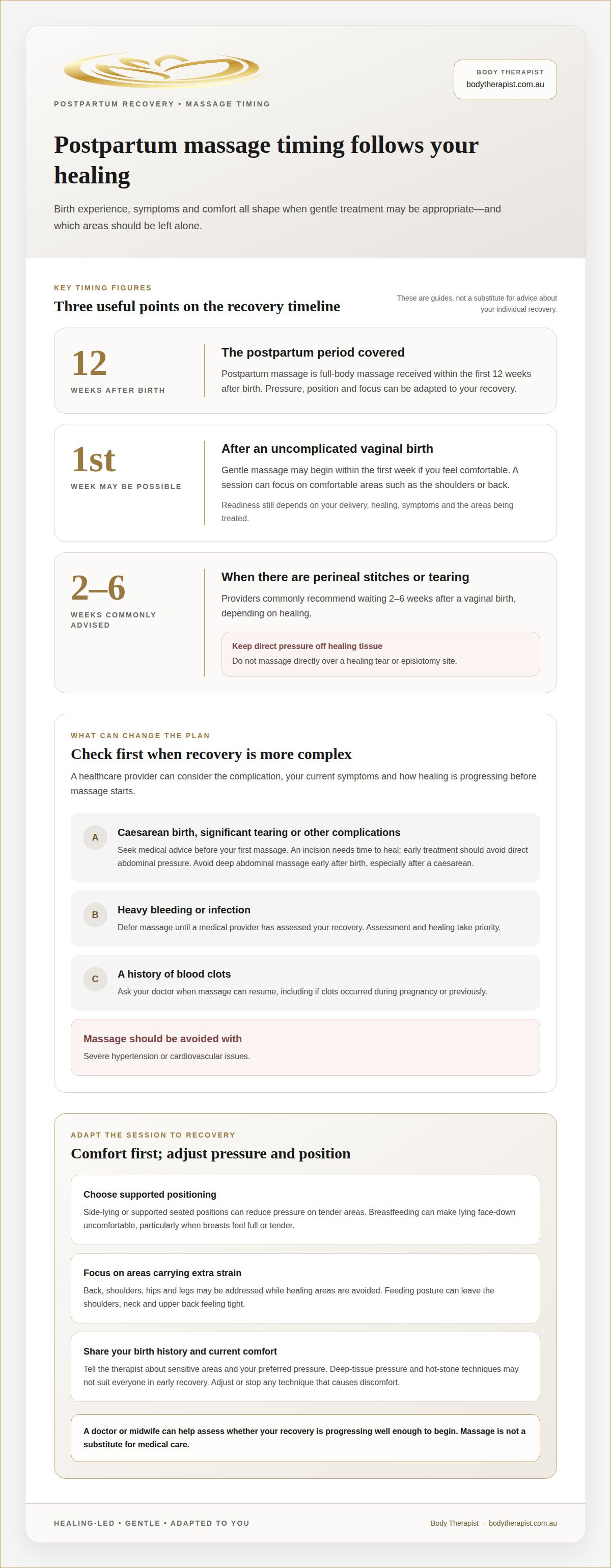
After an uncomplicated vaginal birth, gentle massage may begin within the first week if you feel comfortable. Tearing or stitches call for a more cautious approach. If you’re wondering when it is safe to get a massage after giving birth, the timing depends on your healing and whether you experienced birth complications.
It’s understandable to want relief from the physical strain of pregnancy and birth while also protecting tender or healing tissue. With perineal tearing or stitches, providers commonly recommend waiting 2-6 weeks after a vaginal birth, depending on healing. Massage should not be applied directly over a healing tear or episiotomy.
This guide explains what postpartum massage involves, when gentle treatment may be appropriate, and why stitches, caesarean birth or other complications can change the plan. You’ll also learn when to seek medical advice before starting and how massage can be adapted to support comfort without putting pressure on healing areas.
Table of Contents
What Is Postpartum Massage?
Postpartum massage is full-body massage received within the first 12 weeks after birth. Its pressure, position and focus can be adapted to address discomfort while respecting the body’s recovery.
Pain, swelling and muscle tension
Postpartum massage uses touch and pressure to address muscle tension, discomfort and fluid-related swelling. These concerns can affect everyday movement, rest and feeding positions.
For example, leaning forward while feeding can leave the shoulders, neck and upper back feeling tight. Massage may help release tension in those areas and support circulation. Gentle lymphatic techniques focus on moving fluid through the lymphatic system, which may help ease swelling. Pressure should suit your comfort and recovery, not intensify pain.
Massage during postpartum recovery
Postpartum massage is hands-on treatment adapted to your changing physical needs after birth. It can focus on areas carrying extra strain, such as the back, shoulders, hips and legs.
Positioning matters: side-lying or supported positions can reduce pressure on tender areas and make feeding-related discomfort easier to address. A session can also allow time for rest and focused breathing. Massage is not a substitute for medical care, and treatment needs to account for how birth and healing have affected your body.
Potential recovery benefits
Potential benefits include relaxation, improved comfort and support for circulation as your body adjusts after pregnancy. Massage can also provide a quiet pause within demanding routines, including frequent feeding and disrupted sleep.
A 2020 study reported that massage may increase circulation and hormones involved in breast milk production. Other reported benefits include better sleep quality after back massage during the postnatal period. These findings describe possible effects, not a guaranteed outcome for every person. The practical value is a tailored approach: for example, focusing on upper-back tension rather than areas that feel sensitive or strained.
When to start postpartum massage
After an uncomplicated vaginal birth, gentle postpartum massage can typically begin within the first week if you feel comfortable. When it is safe to get a massage after giving birth depends on your delivery, healing, symptoms and the areas being treated. A doctor or midwife can help assess whether your recovery is progressing well enough to begin.
Timing and readiness
This is especially important after a caesarean birth or delivery complications. A caesarean incision needs time to heal, and early treatment should avoid direct abdominal pressure. Massage on areas away from the incision has a different timeline from abdominal or scar work.
In the first postpartum week, a gentle session may focus on comfortable areas such as the shoulders or back, which can become tight from feeding posture. Adjust or stop a technique if it causes discomfort. Avoid deep abdominal massage early after birth, especially following a caesarean.
Choosing techniques and support
Postpartum massage should be adapted to your recovery, rather than chosen by label alone. Deep-tissue pressure and hot-stone techniques may not suit everyone in early recovery. A therapist experienced in prenatal and perinatal massage can adapt pressure, positioning and techniques to your comfort and birth history.
For anyone asking when it is safe to get a massage after giving birth, readiness also includes emotional wellbeing. Massage may support relaxation and reduce stress, offering a quiet pause during demanding routines. It is not a treatment for depression; persistent low mood or distress needs appropriate health support.
Before a session, share your birth history, current comfort and preferred pressure. This helps shape a suitable approach. A tailored massage approach can focus on comfort and relaxation while taking those factors into account.
Consulting a medical provider after maternal complications
After heavy bleeding or infection, defer massage until a medical provider has assessed your recovery. A history of blood clots also calls for medical advice before massage. Breastfeeding can affect comfort, so side-lying or another supported position can reduce pressure on tender breasts.
Massage after a complicated delivery
After significant tearing, an episiotomy or other delivery complications, consult a healthcare provider before massage. Healing tissue and your overall recovery can affect which areas are suitable for treatment, so a cautious approach matters.
After a complicated delivery, seek advice from a healthcare provider before starting massage. That timing does not mean every area is ready for pressure. The provider can consider the type of complication, current symptoms and healing progress. Massage should not be applied over healing incisions or injured tissue. If pregnancy or birth involved surgery, abdominal treatment needs particular care. A caesarean delivery is a reason to consult a doctor before the first postpartum massage.
Breastfeeding can make lying face-down uncomfortable, particularly when your breasts feel full or tender. Side-lying or a supported seated position can reduce pressure and make it easier to feed before or after treatment. Tell the therapist that you’re breastfeeding and identify sensitive areas so positioning and pressure can be adjusted.
Heavy bleeding, infection and blood clots
Heavy bleeding, infection and a history of blood clots need medical consideration before massage because they can change what is safe during recovery. If you’ve had blood clots during pregnancy or previously, ask your doctor when massage can resume.
Massage should be avoided with severe hypertension or cardiovascular issues. After heavy bleeding or infection, assessment and recovery take priority over a massage appointment. A healthcare provider can consider whether symptoms have settled and whether treatment should avoid particular areas or pressure. Share relevant birth complications, surgery and current concerns before a session; these details help determine suitable positioning and techniques. Massage may help some people feel more relaxed, but it is not a substitute for support with postpartum depression or anxiety. Seek medical support for persistent distress or low mood.
Massage after vaginal birth and perineal stitches
Perineal stitches need time to heal before massage begins, especially near the pelvic floor. After vaginal birth with tearing or stitches, providers commonly recommend waiting 2-6 weeks, depending on healing. The key distinction is between massage elsewhere on the body and pressure near the injured tissue.
During recovery, don’t apply massage directly over a healing perineal tear or episiotomy. A therapist can focus on comfortable areas, such as the upper back or shoulders, while avoiding stitches. This may help if feeding positions create muscle tension, without putting pressure on the perineum.
Before booking, consult your doctor or midwife if the tear was significant, an episiotomy was performed, or healing is causing concern. They can consider the extent of the injury and how it is recovering. Don’t treat the general 2-6-week timeframe as clearance for direct work on the stitches; the tissue needs to be healed first.
Abdominal massage is a separate consideration from perineal treatment. The uterus and abdominal tissues are also recovering after birth, so discomfort in that area matters when planning pressure and positioning. If abdominal pressure feels uncomfortable, leave it out and discuss gentler options. Breastfeeding can also affect positioning: side-lying or supported positions may reduce pressure on tender breasts.
For your first session, tell the therapist about your birth, stitches, comfort levels and feeding needs. This helps them avoid healing tissue and adapt your position and the techniques used. Massage may support relaxation and ease stress, but it does not replace assessment of a healing wound. If the area is not healed, defer direct perineal work.
If you’re ready to discuss a treatment approach that respects your recovery, explore a tailored massage session.
Body Therapist
Body Therapist offers options to discuss once you have reviewed your recovery and any complications with a medical provider. Remedial Massage may suit muscle tension, while Manual Lymphatic Drainage Massage and Lymphedema Therapy address lymphatic concerns. The appropriate focus depends on why you’re seeking treatment and which areas need to be avoided while healing.
Share your birth history, current symptoms and any medical advice about massage when discussing your needs. Massage is not a substitute for assessment or treatment of complications, and healing stitches or incisions should not receive direct pressure.
Plan your next step around recovery
Your next step can be a focused conversation about the support that suits your recovery. When it is safe to get a massage after giving birth depends on your healing and any complications, so bring your current concerns and relevant medical advice to the discussion. A clear goal, such as easing muscle tension or addressing swelling, helps shape a more useful treatment plan.
Body Therapist offers Remedial Massage, Manual Lymphatic Drainage Massage and Lymphedema Therapy. These services address different needs, and the right focus depends on what you want help with. Massage can complement recovery support, but it does not replace medical care for complications or concerns about healing.
When you’re ready to discuss an approach that fits your needs, contact Body Therapist for support. Taking a considered next step can help you feel more informed and comfortable as you continue your recovery.
Frequently Asked Questions
How soon after vaginal birth is it safe to get a massage?
After an uncomplicated vaginal birth, gentle massage may begin within the first week if you feel comfortable. Start with areas away from abdominal or perineal tenderness, such as the shoulders or back, and use light pressure. If you had significant tearing, an episiotomy or other complications, seek medical advice first. Healing and the areas being treated affect the timing.
How long should you wait after a caesarean before getting a massage?
After a caesarean, gentle massage away from the incision may begin within 1-3 weeks once cleared by a doctor. Avoid abdominal massage if the area is tender or has not healed. Direct scar work has a different timeline and should wait until the incision has healed. Tell the therapist about the surgery and any tenderness so they can avoid pressure around the wound.
Can you get a massage after giving birth if you have stitches or a wound?
Massage may be possible on areas away from stitches or a wound, but healing tissue should not receive direct pressure. After vaginal birth with perineal stitches, providers commonly recommend waiting 2-6 weeks, depending on healing. A caesarean incision also needs to heal before scar massage. If the wound is painful or you’re concerned about its recovery, consult a healthcare provider before booking.
What massage positions are safe postpartum, especially after a caesarean?
Choose a position that avoids pressure on tender areas and lets you relax without straining. Side-lying or a supported seated position may suit you if you have a caesarean incision or breast tenderness from feeding. Face-down positioning may feel uncomfortable after abdominal surgery. Tell the therapist which movements or positions cause discomfort; they can adjust your position and focus treatment on other areas.
What are the risks or warning signs that mean you should avoid postpartum massage?
Defer massage and seek medical advice if a birth complication has not been assessed, or if you have a history of blood clots and need guidance on resuming treatment. Massage should be avoided with severe hypertension or cardiovascular issues. Don’t allow pressure on a healing incision, perineal tear or episiotomy. If you have heavy bleeding or signs of infection, contact a healthcare provider before arranging massage.
Should you ask a midwife or doctor before getting a postpartum massage in Australia?
Yes. Consult a doctor or midwife before starting massage if you had a caesarean, a complicated delivery or significant tearing. Medical advice is also important if you have a current or previous history of blood clots. Discuss the type of birth, your healing progress and areas of discomfort so treatment can be planned around your recovery, rather than applying pressure where it isn’t appropriate.
Comments