

Myotherapy vs Physiotherapy for Back Pain: Which to Choose

For back pain, hands-on treatment is not automatically the best first step. When comparing myotherapy vs physiotherapy for back pain, physiotherapy is generally a stronger starting point for spinal pain, recurring symptoms or difficulty with everyday movement. Myotherapy may suit localised muscular tightness and soft-tissue discomfort.
Both approaches can involve assessment and hands-on care, but they focus on different needs. It is understandable to want pain relief while also finding out what may help you move more comfortably and manage the problem over time.
This guide explains how the treatments differ, when physiotherapy may be more appropriate, and how myotherapy techniques such as targeted soft-tissue work and dry needling may help with muscular pain. It also offers a practical way to choose a starting point based on your symptoms and goals.
Table of Contents
Myotherapy vs Physiotherapy: Which Treatment Is Best For You?
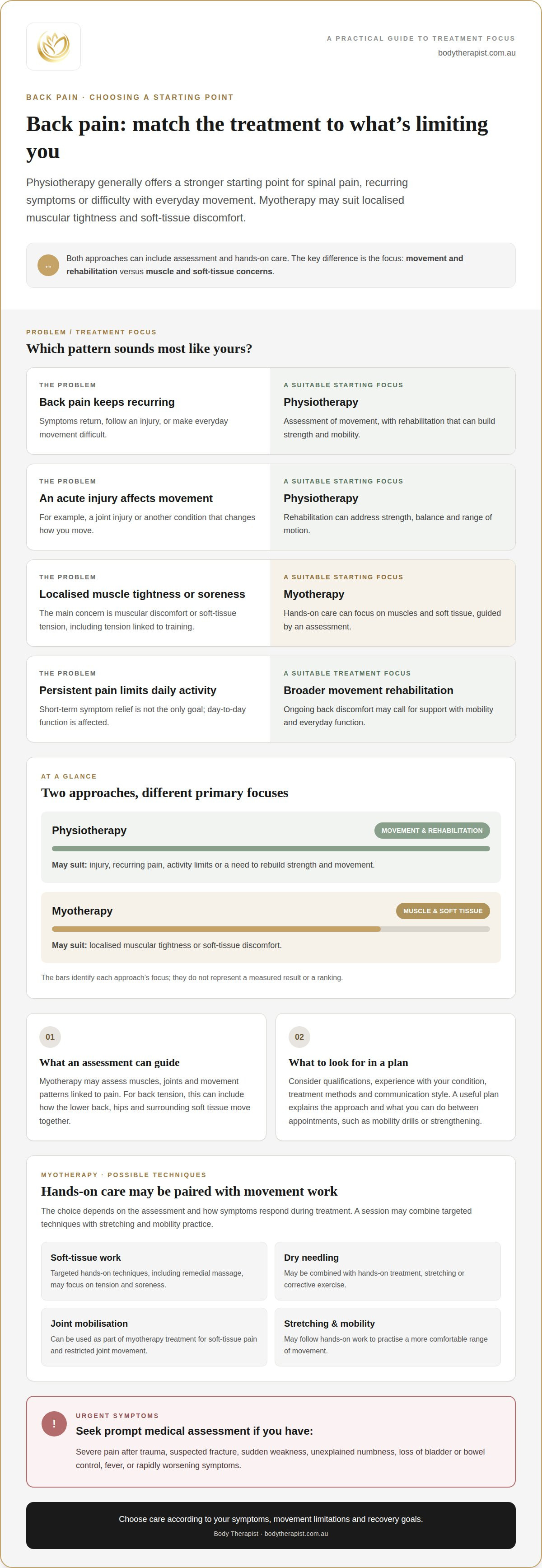
Choose care based on your symptoms, movement limitations and recovery goals. Physiotherapy focuses on movement and rehabilitation; myotherapy centres on muscular and soft-tissue concerns.
Choosing a practitioner and treatment plan
When choosing a practitioner for back pain, consider their qualifications, experience with your condition, treatment methods and communication style. Australian physiotherapists are registered health practitioners; myotherapists complete a recognised qualification but are not registered through the same national system. A useful plan explains the treatment approach and what you can do between appointments, such as mobility drills or strengthening.
Appointment fees in Australia vary according to the practitioner, appointment length and treatment provided.
Care for acute injuries and persistent pain
After an acute injury, such as a joint injury or a condition affecting movement, physiotherapy is usually the starting point. Its rehabilitation approach can address strength, balance and range of motion. For persistent muscle tension or localised soft-tissue discomfort, myotherapy may better suit a hands-on treatment goal. Persistent pain that limits daily activity may still call for broader movement rehabilitation.
Seek prompt medical assessment for severe pain after trauma, suspected fracture, sudden weakness, unexplained numbness, loss of bladder or bowel control, fever or rapidly worsening symptoms.
Physiotherapy or myotherapy for back pain
See a physiotherapist rather than a myotherapist when back pain recurs, affects everyday movement, follows an injury or requires a rehabilitation plan. Physiotherapy can assess movement and build strength and mobility. Myotherapy may suit localised muscular tightness or soft-tissue pain, including tension linked to training. For spinal pain, physiotherapy is generally the better starting point.
Choose according to whether your main goal is movement rehabilitation or hands-on care for muscular symptoms.
Myotherapy techniques, including remedial massage and dry needling
Myotherapy begins with an assessment of the muscles, joints and movement patterns linked to pain. For back tension, a practitioner may examine how the lower back, hips and surrounding soft tissue move together. This helps guide treatment towards the areas contributing to the problem, rather than applying the same technique to every sore muscle.
The Victorian Government’s Better Health Channel says myotherapy treats soft-tissue pain and restricted joint movement using massage, dry needling and joint mobilisation. A session may combine targeted hands-on techniques with stretching and mobility work. For example, pressure on a tense muscle may be followed by a stretch to practise a more comfortable range of movement.
Remedial massage mainly focuses on easing tension and general soreness through soft-tissue work. Myotherapy may involve a more detailed assessment, orthopaedic testing and treatment planning. A remedial massage therapist assesses the area needing care and selects massage techniques to address musculoskeletal pain. This distinction helps match the approach to the treatment goal.
Dry needling may be combined with hands-on treatment, stretching or corrective exercise. Other myotherapy techniques can include taping, myofascial cupping, joint mobilisation and advice on muscle and pain management. The choice depends on the assessment and how symptoms respond during treatment. For example, persistent tightness after training may call for soft-tissue work and mobility practice, while restricted movement may draw attention to a joint.
Physiotherapy can also use manual therapy, but commonly combines it with exercise-based rehabilitation. A physiotherapist may prescribe strength work, postural re-education or movement practice; some also use electrotherapy such as TENS. These methods address different parts of recovery, so treatment may focus on both immediate symptoms and how the back functions during daily tasks.
For hands-on care aimed at muscle tension and soreness, remedial massage treatment may be a relevant option alongside a broader rehabilitation plan.
Myotherapy’s hands-on treatment of soft tissue pain
Myotherapy assesses musculoskeletal pain by examining how soft tissue, muscles and joints contribute to restricted function. A practitioner may use palpation to locate tender or tense areas, then relate those findings to movements that reproduce discomfort. For example, bending or turning may reveal whether a back complaint involves local muscle sensitivity or broader movement difficulty.
The Myotherapy Association Australia defines myotherapy as evidence-based assessment, treatment and rehabilitation for musculoskeletal pain and associated conditions. Treatment may include targeted manual techniques and practical movement work. The focus is on managing pain and dysfunction identified during assessment, rather than providing a formal medical diagnosis.
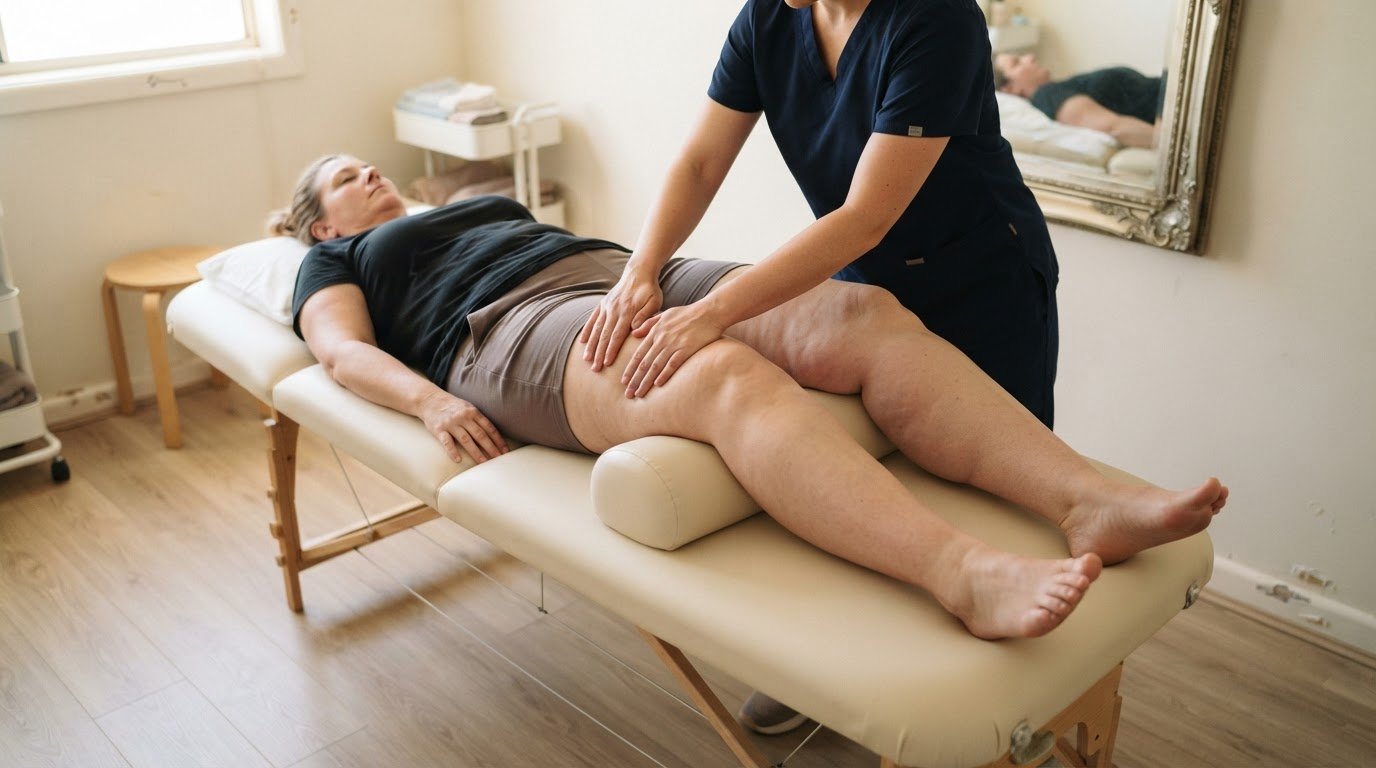
Hands-on care can include soft-tissue techniques directed at affected muscle groups. These techniques may ease discomfort and make movement feel more manageable in the short term. A practitioner can also suggest mobility drills or basic strengthening between sessions, connecting treatment with everyday activities such as sitting, walking or lifting.
Physiotherapy commonly combines manual therapy with exercise-based rehabilitation. A physiotherapist may assess strength, joint mobility and coordination, then prescribe exercises to improve movement capacity. For example, someone whose back pain makes lifting difficult may practise controlled movement and progressive strengthening, alongside hands-on treatment where appropriate.
The key difference is emphasis, not a strict separation between methods. Myotherapy centres on musculoskeletal pain and soft-tissue dysfunction; physiotherapy often places greater emphasis on movement rehabilitation and function. Both approaches can include assessment and hands-on care, with the plan tailored to the person’s symptoms and recovery goals.
A clear treatment plan links each method to a practical aim. For example, manual therapy may address muscle tenderness, while a home exercise supports strength or mobility. Progress can be reviewed through changes in movement, daily tasks and symptom response, with the practitioner adjusting the approach as recovery develops.
Myotherapy for chronic musculoskeletal pain and back pain
Persistent back pain can involve muscle tension, restricted movement and reduced mobility. Myotherapy may help manage musculoskeletal discomfort through targeted soft-tissue treatment, movement advice and self-care strategies. For example, a practitioner may address a trigger point associated with local tension, then discuss posture or ergonomics that affect daily activities.
Chronic neck pain is defined as cervical discomfort lasting more than three months. Possible causes include poor posture, muscle strain, whiplash injuries, occupational factors and degenerative disc disease. Ongoing neck pain can affect sleep quality, mental health and general wellbeing, so management may need to consider more than the painful area alone.
Myotherapy may support mobility and range of motion, with maintenance treatment or preventive methods aimed at reducing recurrence. For someone whose back tightens during sports training, a plan might combine hands-on care with practical changes to movement or recovery habits. Remedial massage and dry needling are possible techniques, selected according to symptoms and treatment goals.
Physiotherapy may be a better fit when chronic pain limits strength, mobility or everyday activity. Rehabilitation can build strength and movement capacity gradually, helping someone return to tasks such as walking, lifting or training. Myotherapy focuses more directly on muscle and soft-tissue symptoms; the approaches can complement each other when both pain and function need attention.
In Australia, physiotherapy appointments may be covered under Medicare or NDIS funding. Medicare, private health insurance and a Chronic Disease Management plan each have eligibility and coverage conditions, so the applicable pathway depends on the person’s circumstances and policy.
With either therapy, tell the practitioner if hands-on treatment or exercise increases discomfort. This gives them the opportunity to adjust the technique, intensity or activity to support recovery and keep the plan aligned with your symptoms.
For persistent soft-tissue discomfort, book remedial massage to discuss hands-on care as part of your pain-management approach.
Body Therapist
Body Therapist provides hands-on therapeutic services for people seeking support with soft-tissue discomfort. If your back tension feels muscular and your goal is focused hands-on care, Remedial & Lymphatic Massage may be relevant. For recurring spinal pain, injury rehabilitation or movement limitations, physiotherapy remains the more suitable starting point.
The right approach depends on what you need help with, whether that is muscle soreness, lymphatic support or care tailored to pregnancy or oncology needs. Body Therapist provides Remedial & Lymphatic Massage, Manual Lymphatic Drainage Massage, Lymphedema Management / Lymphedema Therapy and Pre- and Post-Surgical Management (including Scar Tissue & Oncology Massage). These services address different needs, so the appropriate option depends on the purpose of care.
For persistent or worsening back pain, seek medical assessment when symptoms indicate a need for it, and use movement-focused rehabilitation where appropriate. To discuss whether Body Therapist’s hands-on services suit your needs, contact Body Therapist.
Take the next step towards comfortable movement
The decision about myotherapy vs physiotherapy for back pain is a starting point, not a label you need to settle on permanently. Focus on the task you want to manage more comfortably, whether that is sitting through work, lifting, walking or returning to training. That goal gives a practitioner useful context for shaping care around your daily function.
Before your next appointment, note what tends to aggravate your pain, what eases it and which movements feel restricted. This practical record can make the conversation more specific and clarify whether your priority is hands-on relief, movement rehabilitation or both. If symptoms change or disrupt everyday activities, mention that too.
For support with hands-on therapeutic care, contact Body Therapist to discuss your needs. A considered next step can help you move towards care that fits your goals and supports steady progress.
Frequently Asked Questions
And how is that different from seeing a Physiotherapist?
Myotherapy gives particular attention to soft-tissue symptoms, while physiotherapy can assess and manage a wider range of movement concerns. For example, if a sore back makes it difficult to get out of a chair, a physiotherapist may assess that functional movement and plan rehabilitation around it. Myotherapy may suit someone seeking focused care for muscle tension contributing to discomfort.
Can physiotherapy include dry needling?
Yes, physiotherapy can include dry needling as one part of a broader treatment plan. For example, a physiotherapist may combine it with movement assessment and exercise when muscle tension affects a person’s activity. Dry needling is not the whole rehabilitation plan: the practitioner considers the person’s symptoms, function and goals when selecting techniques.
Conclusion: Why Choose Myotherapy?
Choose myotherapy when your main concern is localised muscle or soft-tissue discomfort and you want care focused on those symptoms. It may be a practical option for tension affecting a specific movement, such as turning your torso comfortably. If pain follows a significant injury or you need a structured return to activity, physiotherapy may better suit that rehabilitation goal.
What is the difference between myotherapy and physiotherapy for back pain in Australia?
The main difference in myotherapy vs physiotherapy for back pain is the treatment emphasis. Myotherapy focuses on musculoskeletal pain and soft-tissue dysfunction, while physiotherapy can assess movement and support rehabilitation. In Australia, physiotherapists are registered health practitioners who can diagnose within their scope. Myotherapists complete a recognised qualification but are not registered through the same national system.
Is myotherapy or physiotherapy more effective for lower back pain?
Neither approach is automatically more effective for every person with lower back pain. The better fit depends on what is limiting you. If muscle tenderness is the main concern, myotherapy may suit a hands-on treatment goal. If back pain affects walking, lifting or other everyday tasks, physiotherapy can address movement and rehabilitation needs. The treatment aim matters more than the label.
What treatments do Australian myotherapists use for back pain?
Australian myotherapists may use targeted soft-tissue techniques, massage, dry needling, stretching and mobility work. A session could focus on a tense area around the lower back, then include movement practice relevant to a daily task, such as bending to pick something up. Treatment methods vary according to assessment findings and symptoms; the aim is to address musculoskeletal pain and support movement.


Comments