

Myotherapy for Tension Headaches: How Treatment Works

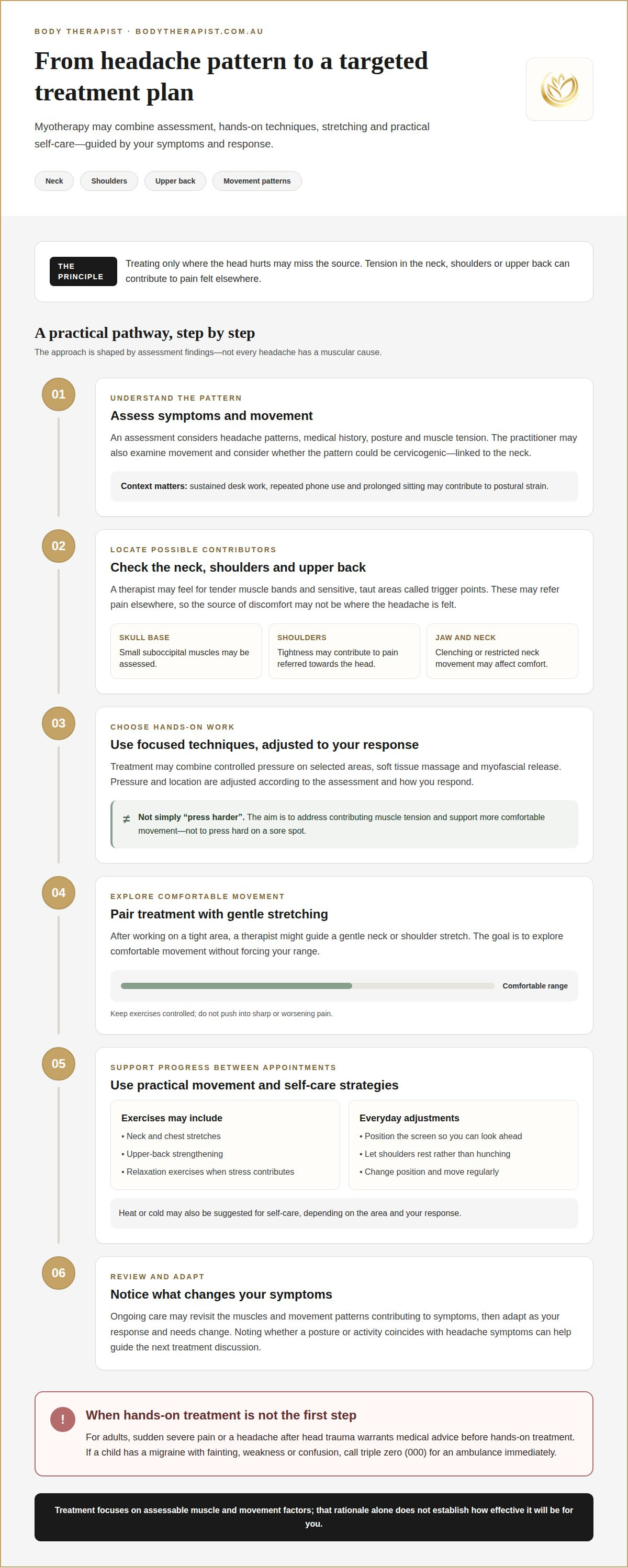
The most useful massage for a tension headache is one that addresses neck and shoulder tension that may contribute to pain. Myotherapy for tension headaches can combine soft tissue treatment, trigger point work and stretching to ease tight muscles, including areas that may refer pain into the head. It is a targeted approach, rather than simply massaging where the pain is felt.
A dull ache that begins near the base of the skull and spreads around the head can make desk work, concentration and everyday movement difficult. In this guide, you’ll learn how trigger points may send pain elsewhere, which massage approaches may help and what to expect during a myotherapy assessment and treatment. You’ll also see how posture, muscle tension and individual headache patterns shape the approach, and when headaches call for medical advice rather than hands-on treatment.
Table of Contents
What is the Best Massage for Tension Headaches?
For tension headaches, the most suitable massage depends on the muscles and movement patterns involved. Myotherapy for tension headaches can combine soft tissue treatment, trigger point therapy and stretching, rather than focusing only on the painful area. Remedial massage also addresses muscle tension. An assessment helps guide which approach may suit your symptoms and whether the pattern could be cervicogenic, meaning linked to the neck.
Work habits can contribute to strain. Hours at a computer or repeated phone use, for example, may encourage forward head posture and overload the muscles at the base of the skull. Long periods of sitting can also round the shoulders and draw them towards the ears. Repetitive movements and sustained positions may place ongoing demands on the neck and upper back, particularly during desk-based work.
Ergonomic adjustments can reduce sustained strain. Position your screen so you can look ahead rather than continually tipping your chin down, and let your shoulders rest instead of hunching towards your ears. Change position and move regularly during desk work. These practical adjustments address specific postural habits; stress, fatigue and poor sleep can also contribute to muscle tension and headache patterns.
Myotherapy assesses musculoskeletal tension and may use hands-on techniques, movement advice and trigger point therapy. Physiotherapy often centres on movement assessment and rehabilitation; massage focuses on manual soft tissue treatment; osteopathy uses hands-on assessment and treatment of the musculoskeletal system. These approaches can overlap, so the important distinction is the assessment and treatment plan for your headache pattern.
Headaches can have different causes, so massage isn’t the right response to every symptom. If a child has a migraine with fainting, weakness or confusion, call triple zero (000) for an ambulance immediately, according to Sydney Children’s Hospitals Network. For adults, sudden severe pain or headache after head trauma warrants medical advice before hands-on treatment.
Trigger point therapy
Trigger point therapy targets sensitive, taut areas in muscle that may contribute to headache pain. Treatment can combine focused pressure, soft tissue work and movement.
Manual therapy techniques
A therapist may feel the neck, shoulders and upper back to locate tender muscle bands, then apply controlled pressure to selected areas. For example, treating the small suboccipital muscles at the skull base may ease local tightness associated with a headache pattern.
Other manual techniques include soft tissue massage and myofascial release, which address restricted or tense tissues. The therapist adjusts pressure and location according to the assessment and your response. The aim is to reduce contributing muscle tension and support more comfortable movement, not simply to press hard on a sore spot.
Stretching can complement hands-on treatment. After working on a tight area, a therapist might guide a gentle neck or shoulder stretch to help you explore comfortable movement without forcing your range.
Ongoing therapy and home exercises
Ongoing therapy may combine follow-up treatment with exercises or self-care between appointments. For persistent tension headaches, a plan can revisit the muscles and movement patterns contributing to symptoms, then adapt as your response and needs change.
Home exercises may include neck and chest stretches or upper-back strengthening, selected to address your movement findings. Relaxation exercises and stress-management strategies can also help when stress contributes to muscle tension. Practising comfortably and consistently can extend movement work beyond the treatment session.
Keep exercises controlled rather than pushing into sharp or worsening pain. A therapist can demonstrate each movement, explain how it should feel and modify it if your symptoms change. Heat or cold may also be suggested for self-care, depending on the area and your response.
Between sessions, note whether a particular posture or activity coincides with headache symptoms. This information can help guide the next treatment discussion and refine which techniques or exercises remain relevant.
Muscle trigger points and referred headache pain
A trigger point is a sensitive area in a muscle that may refer pain elsewhere. This helps explain why headache discomfort may not begin where the tense muscle is.
Jaw, neck and shoulder tension
Jaw clenching, restricted neck movement and tight shoulder muscles can all affect head and neck comfort. For example, tension in the upper back or shoulders may refer pain towards the head, while neck-related dysfunction may cause pressure around the back of the head or forehead.
Posture and sustained muscle activity can contribute to stiffness. Massage and other hands-on techniques may address soft tissue tension and encourage movement in affected areas. Manual treatment may aim to improve local circulation, ease stiffness and support comfortable neck and shoulder movement.
Myotherapy for muscle tension
Myotherapy assesses musculoskeletal tension and may involve soft tissue treatment, trigger point work and stretching. For headaches, a practitioner can examine the neck, shoulders and upper back, then relate the findings to your symptoms and movement.
The approach has a muscular rationale: it targets tension and trigger points that may contribute to headache pain. That rationale alone does not establish how effective treatment will be for you.
Evidence establishing myotherapy’s effectiveness specifically for tension-type headaches is not detailed here. Treatment focuses on assessable muscle and movement factors, rather than assuming every headache has a muscular cause.
Medicare, private health insurance and workers compensation coverage depends on eligibility, policy terms and claim circumstances. Check the relevant scheme’s criteria for your situation.
The cost depends on the case and is provided after a quote request; factors include assessment needs, treatment approach and session length.
Manual treatment intensity can be adapted to your comfort. Discuss your health history and symptoms before treatment. If you have severe or chronic headaches, seek medical advice first to rule out underlying causes.
In Australia, look for a myotherapist with formal training and experience assessing musculoskeletal issues related to headaches. Ask how they assess muscle tension, explain treatment options and adapt techniques to your symptoms.
Myotherapy assessment and treatment
A headache assessment relates your symptom pattern to musculoskeletal findings. It can also help identify when medical review should come before hands-on treatment.
At an initial appointment, the myotherapist discusses your medical history, headache characteristics and relevant lifestyle factors. They may ask where the pain starts, how it spreads and whether neck movement or desk work affects it. Your answers help distinguish muscular patterns from symptoms that may need further medical assessment.
The physical assessment may include observing posture and neck movement, then palpating the neck, shoulders and upper back. This helps locate muscle tension, trigger points or restricted movement. If symptoms suggest cervicogenic headaches, the practitioner considers whether neck-related findings match your reported pain. Migraines can have different features and causes, so a headache pattern should not be assumed to be muscular.
Treatment is guided by the findings. It may involve soft tissue manipulation, trigger point therapy, myofascial release around the neck, scalp or jaw, and comfortable stretching. The practitioner may also suggest postural cues, neck and chest stretches, or upper-back strengthening exercises. These strategies address relevant movement patterns alongside hands-on care; they do not establish or treat an underlying medical cause.
For severe or chronic headaches, seek medical advice before seeing a myotherapist to rule out underlying medical or neurological conditions. A sudden, severe headache without a previous migraine history, or a headache after head trauma, also warrants prompt medical advice.
If a musculoskeletal assessment is appropriate, book a myotherapy assessment to discuss your headache pattern and treatment options.
For sinus headaches, myotherapists may use techniques to address sinus pressure and tension in facial and neck muscles.
Possible causes of headache or migraine also include TMJ dysfunction, stress, fatigue, hormonal changes and dehydration.
Body Therapist
If your headache symptoms coincide with muscle tension and you would like to discuss hands-on care, Body Therapist offers a practical next step. Remedial Massage may be relevant when neck, shoulder or upper-back tension contributes to discomfort. Discussing your symptoms and health history helps guide whether this approach suits your needs.
Headaches can have causes beyond muscle tension, so seek medical advice for severe, sudden or changing symptoms before pursuing massage. For ongoing concerns, Body Therapist can discuss suitable therapeutic options without assuming every headache has the same source.
Contact Body Therapist to discuss your symptoms and the support you are seeking.
Take the next step towards tailored care
Choosing myotherapy for tension headaches starts with matching the approach to your symptoms and goals. Describe how the pain affects your work, sleep or movement when discussing treatment. That context can help shape a plan around your needs, rather than treating every headache as the same problem.
Body Therapist offers Remedial & Lymphatic Massage, Manual Lymphatic Drainage Massage and Lymphedema Therapy. These services address different therapeutic needs, and a discussion can help identify which option is relevant to your situation. If headaches are severe, changing or concerning, prioritise medical advice before arranging hands-on care.
For an individual discussion about your needs and suitable care, contact Body Therapist. A considered next step can help you move forward with greater clarity and confidence.
Frequently Asked Questions
What is myotherapy and how may it help tension headaches?
Myotherapy assesses and treats musculoskeletal pain, including muscle factors that may contribute to tension headaches. It does not diagnose every cause of head pain. For example, a practitioner may compare neck movement with where your discomfort appears, then consider whether manual treatment or movement guidance is relevant. This helps determine whether a muscular approach suits your symptoms and which areas need attention.
Which myotherapy techniques are used for tension headaches?
Techniques may include soft tissue massage, trigger point pressure, myofascial release and guided stretching. Some myotherapists may also use dry needling. The choice depends on assessment findings, the location of muscle sensitivity and your comfort with each approach. Discuss your preferences before treatment so the practitioner can adapt the techniques rather than apply one method automatically.
How many myotherapy sessions are typically needed, and how often?
The number and spacing of appointments depend on your headache pattern, how long symptoms have been present, contributing factors and your response to treatment. A practitioner can review changes between visits, such as headache frequency, movement comfort and the effect of symptoms on daily activities. These observations help guide whether to continue, adjust the approach or focus more on self-management strategies.
What should I expect at a myotherapy appointment for headaches?
Expect a discussion about your symptoms, health history and what you hope to improve. The practitioner may assess neck and shoulder movement before suggesting treatment. You can ask what a technique involves and say if the pressure feels uncomfortable. Afterwards, the practitioner may discuss relevant stretches or movement strategies, providing practical guidance for between appointments.
What are the risks or side effects of myotherapy, and who should avoid it?
Treatment intensity can be adapted to your comfort, and you should discuss your health history and symptoms beforehand. If you have severe or chronic headaches, sudden severe pain, or a headache after head trauma, seek medical advice before hands-on treatment.

Comments