

How to Maintain Fat Cavitation Results With Healthy Habits

Results may vary, and maintaining changes can depend on habits beyond the treatment itself. Understanding how to maintain fat cavitation results means looking beyond treatment timing to the habits that support weight control. Healthy routines matter after the appointment, not just before it.
It’s understandable to want results to last after investing time in treatment. The practical answer is that consistent eating and movement habits can help manage body weight, while no single session replaces those foundations.
This article explains how diet and regular exercise support maintenance, how treatment spacing can shape a plan, and where lymphatic massage may fit as a complementary option. It also explains why a measured, sustainable approach is more useful than expecting an immediate change.
Table of Contents
Lymphatic massage as a possible complementary treatment
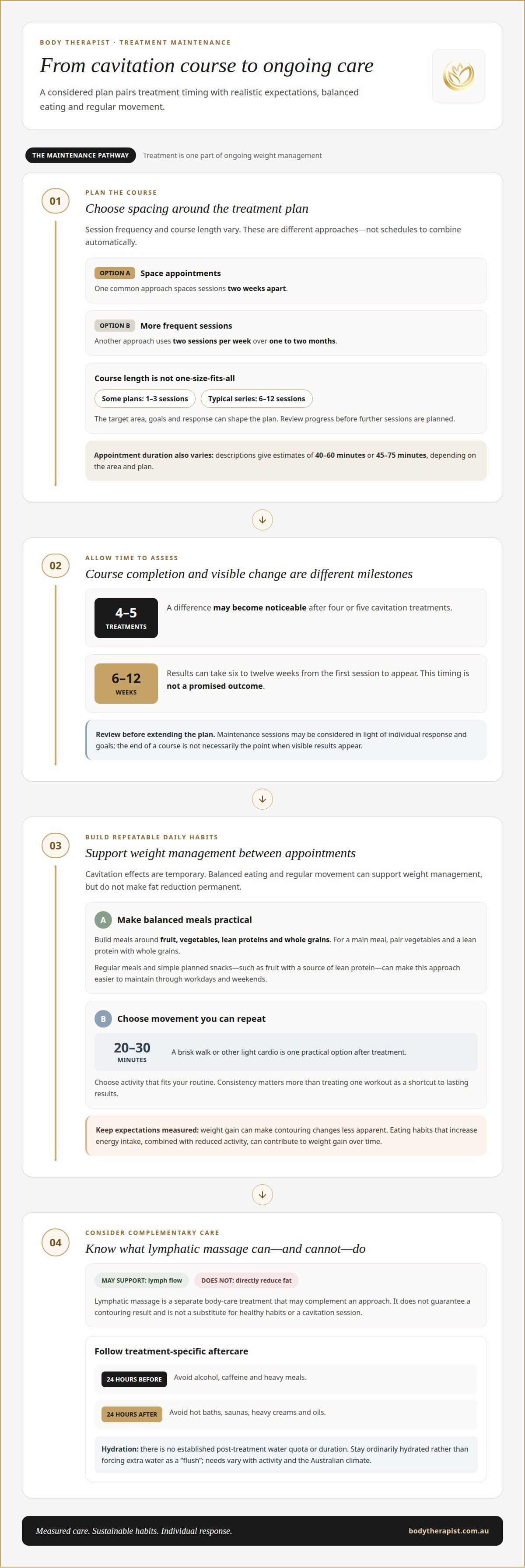
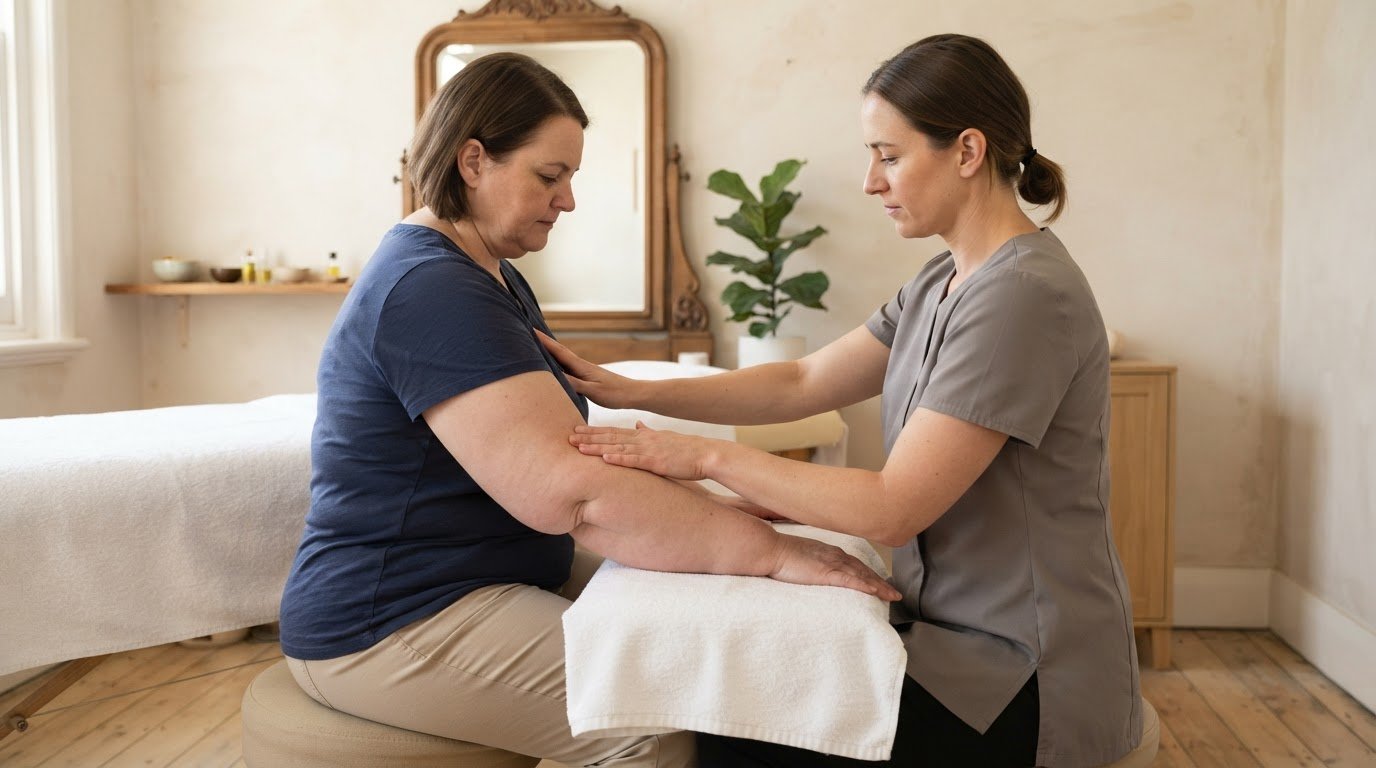
Lymphatic massage can be a separate body-care treatment alongside fat cavitation. It uses gentle techniques to support lymph flow, rather than directly reducing fat or guaranteeing a contouring result. Consider it for lymphatic support, not as a substitute for healthy habits or a cavitation session. The lymphatic system has a different role from body-contouring treatment.
Fat cavitation is often presented as a temporary treatment, and ongoing care may be considered. Liposuction and cryolipolysis are different interventions, so their results shouldn’t be treated as equivalent or assumed to follow the same timeline. A difference may become noticeable after four or five cavitation treatments, while results can take 6 to 12 weeks from the first session to appear. These timeframes describe different stages, not a promised outcome.
Series length varies across treatment plans. A typical series is described as 6 to 12 sessions, with response and goals shaping whether maintenance is considered. After treatment, avoid hot baths, saunas, heavy creams and oils for 24 hours. Before a session, avoid alcohol, caffeine and heavy meals during the 24 hours beforehand. These steps help you follow the stated aftercare around the treated area.
There is no established post-treatment water quota or duration to follow. Stay ordinarily hydrated rather than forcing extra water as a “flush”; hydration needs vary with factors such as activity and the Australian climate.
Risks and side effects vary by device and treated area, so there is no universal list that applies to every treatment. Follow the treatment-specific aftercare instructions and seek medical advice for unexpected or persistent symptoms. Base decisions about further treatment or lymphatic support on your response, not assumptions.
Treatment session frequency and course length
Fat cavitation plans vary in session spacing, course length and appointment duration. These details affect how treatment fits your routine and when progress can be assessed.
Treatment Session Timing and Frequency
Session timing means the interval between appointments. One common approach may space sessions two weeks apart; another uses two sessions per week over a one to two-month period. These schedules differ, so there is no single fixed frequency. Spacing shapes the course and allows progress to be reviewed before further sessions are planned.
Treatment Schedules and Session Numbers
A treatment schedule sets the number of sessions and their timing around your target area and goals. Some plans involve one to three sessions, while a typical course may consist of 6 to 12. These are distinct approaches, not steps to combine automatically. A consultation can help map the intended reduction, review your response and determine whether the planned course remains appropriate.
Appointment duration also varies across descriptions. One typical session is reported as lasting 45 to 75 minutes; another estimate is 40 to 60 minutes, depending on the size of the treatment area. The difference highlights why duration is best considered alongside the clinic’s plan and the area being treated, rather than used alone to judge a session.
The effects of cavitation may vary, so maintenance needs can depend on individual response. Maintenance sessions may therefore be considered according to your body’s response and goals. Changes can take 6 to 12 weeks from the first session to appear, so the end of a course and the time to visible results aren’t necessarily the same point.
For a clearer view of how treatment may fit your goals, explore ultrasonic fat cavitation treatment as part of your planning.
Maintaining results with a healthy diet and regular exercise
Fat cavitation’s effects are temporary, so daily eating and movement habits matter afterwards. A balanced diet and regular exercise support weight management and help maintain progress.
Balanced Eating for Maintaining Progress
A balanced diet gives you a practical structure for managing weight after treatment. Build meals around fruit, vegetables, lean proteins and whole grains instead of relying on restrictive eating. For example, pair vegetables and a lean protein with whole grains at a main meal. A low-calorie balanced diet can help manage body weight, supporting the longer-term appearance of body contouring.
Food Choices and Lifestyle
Food choices work best as part of a repeatable lifestyle, not as a short-term response to treatment. Regular meals that include the food groups above can make balanced eating easier to maintain through busy workdays and weekends. If your routine changes, plan a simple meal or snack ahead, such as fruit with a source of lean protein. This keeps your approach grounded in everyday choices rather than pressure to follow a perfect diet.
Weight gain can make contouring changes less apparent because fat reduction treatment does not replace ongoing weight management. Eating habits that increase energy intake, combined with reduced activity, can contribute to weight gain and affect how the treated area looks over time.
Regular Exercise and Changing Habits
Regular exercise supports weight control and gives your maintenance plan a consistent movement component. After treatment, a brisk 20- to 30-minute walk or other light cardio is one practical option. Choose an activity that fits your routine, such as walking, and keep it manageable enough to repeat. Consistency matters more than treating one workout as a shortcut to lasting results.
When a regular walk or exercise routine falls away, daily movement may drop too. Re-establish an activity that suits your schedule and pair it with balanced eating. These habits support weight management, but they do not make temporary fat reduction permanent.
Healthy lifestyle habits for maintaining results
Ultrasound cavitation is non-invasive, and its fat-reduction effects are temporary. A healthy lifestyle supports weight management after a treatment series, but it cannot make body-contouring results permanent. To understand how to maintain fat cavitation results, treat the procedure as one part of ongoing care, not a replacement for your usual routines.
Make healthy choices easier to repeat. Plan balanced meals around vegetables, fruit, lean protein and whole grains, and keep practical options available for busy days. A low-calorie balanced diet and regular exercise can help manage body weight after cavitation. The focus is on weight management, not on expecting a particular food to extend ultrasound’s effects.
Movement can fit into everyday activities. Walking and yoga are examples of light physical activity that can help stimulate the lymphatic system after fat cavitation. Choose an option that suits your routine, such as walking during a regular break or fitting yoga into a quiet part of the day. The aim is sustainable activity, not a punishing programme to compensate for eating.
Lifestyle changes that increase body weight can make contouring progress less apparent. For example, if regular movement drops away and eating shifts towards frequent, energy-dense choices, weight management may become harder. Notice what disrupts your routine, then make a practical adjustment, such as planning meals before a busy week or choosing a walk instead of staying inactive.
Compare progress under similar conditions rather than judging your shape after one meal or one inactive day. Knowing how to maintain fat cavitation results also means focusing on repeatable habits and how your clothes fit over time. This gives you a more useful view of lasting lifestyle changes than expecting ultrasound treatment to offset later weight gain.
If you’re considering body contouring as part of a broader plan, discuss your body-contouring goals and the habits you want to maintain.
Body Therapist: Manual Lymphatic Drainage Massage
Body Therapist offers Manual Lymphatic Drainage Massage for people seeking gentle lymphatic support as part of their broader wellbeing routine. It complements the healthy habits discussed above, but does not remove fat or guarantee longer-lasting fat cavitation results. Consider it when lymphatic support is a separate goal from body contouring.
A session uses gentle manual techniques focused on lymphatic flow. Manual Lymphatic Drainage Massage is distinct from cavitation, which uses ultrasound for body contouring, and should not replace medical care for swelling or other health concerns. Lymphedema Therapy is another option for focused lymphatic support.
To discuss whether Manual Lymphatic Drainage Massage suits your needs, contact Body Therapist or visit bodytherapist.com.au.
Choose a next step that fits your goals
Understanding how to maintain fat cavitation results starts with a realistic view of your goals for ongoing care. Consider whether your priority is body contouring, lymphatic support or a separate area of discomfort. This distinction can help you discuss relevant options clearly, without treating massage as a way to preserve or guarantee cavitation outcomes.
Body Therapist offers Manual Lymphatic Drainage Massage, Lymphedema Therapy and Remedial Massage. Each is a distinct service, so the conversation should start with your needs and health context. Describe what you hope to address and discuss which service relates to that goal.
Take the next step at your own pace. Contact Body Therapist to discuss your goals and explore a suitable path forward. A thoughtful plan can help you make choices with confidence and keep your wellbeing goals in focus.
Frequently Asked Questions
Do the Results Last?
No. Fat cavitation results are temporary, not permanent. Separate the treatment’s local contouring aim from broader changes in body weight. For example, if your clothing fit changes over several weeks, note the circumstances, including any changes to your routine. A consistent record can help you assess progress more clearly than relying on a single impression after treatment.
How long do fat cavitation results typically last?
There is no single duration that applies to everyone. The appearance of the treated area can change as body weight and everyday habits change, so a treatment course does not set a fixed end date for results. Keep expectations focused on the specific area and goal discussed before treatment. This helps distinguish a change in contour from broader weight changes over time.
What aftercare is recommended after fat cavitation?
Follow the aftercare instructions for your treatment, and avoid adding procedures or products to the treated area without guidance. If you notice an unexpected or persistent symptom, seek appropriate medical advice rather than trying to manage it with massage or another treatment. Briefly note when the symptom began and how it changes so you can describe it clearly.
What diet and exercise help maintain fat cavitation results?
Choose a routine you can sustain through ordinary changes in work, travel and social plans. Review your weekly pattern and identify one manageable adjustment, such as planning meals before a busy stretch or setting aside time for movement. This makes it easier to notice when your routine has shifted and return to habits that support weight management.
How many fat cavitation sessions are usually needed, and how often?
There is no single session count or schedule for every treatment plan. The number and spacing depend on the treated area, your goals and how your body responds during the course. Discuss what the plan is intended to address and how progress will be reviewed. This gives you a clearer basis for deciding whether the next appointment fits the original goal.
Can fat cavitation be repeated safely, and how long should you wait between treatments?
Whether to repeat treatment and when to schedule it should follow the plan for your treatment and target area. Do not add sessions on your own or assume another person’s schedule applies to you. If your goal or circumstances have changed since your last appointment, raise this before planning further treatment so the next step reflects your current needs.
Comments