

How to Improve Skin Elasticity After Pregnancy: A Realistic Guide

Updated: 43 minutes ago
What if improving skin elasticity after pregnancy starts with supporting your skin, rather than trying to force it to tighten? It’s understandable to wonder how to improve skin elasticity after pregnancy, especially when loose skin or stretch marks look unfamiliar. These changes are common after the body stretches and adapts, and they don’t mean something is wrong.
Recovery varies, and skin may change over time, but no cream, exercise routine or treatment can promise to restore its previous appearance. A useful first step is to identify what you’re noticing: skin laxity differs from fluid-related swelling and changes in the abdominal muscles, so each concern calls for a different approach.
This guide explains why postpartum skin changes happen, which everyday habits support general skin health, and how to weigh treatment options realistically. You’ll also learn where RF Skin Tightening may fit as a non-surgical option, without treating it as a guaranteed fix. The aim is to help you make informed, individual decisions at a pace that respects your recovery.
Table of Contents
How pregnancy changes skin elasticity and appearance
Skin elasticity is the skin’s capacity to stretch and then recoil towards its previous shape. Skin laxity describes reduced firmness, where skin appears looser or less able to spring back. It refers to the skin itself, not the strength or tone of the muscles beneath it. During pregnancy, the abdomen expands to accommodate a growing baby, and some people also notice changes around the breasts, hips or thighs. The amount of stretching and how the skin looks afterwards varies from person to person.
Visible changes don’t all mean the same thing. Stretch marks are lines or bands in the skin’s surface that can develop as skin stretches. Loose skin is a change in firmness or drape. Abdominal muscle separation or reduced muscle strength can affect the shape and support of the abdomen, but strengthening muscles doesn’t necessarily tighten loose skin. Fluid-related fullness is different again. More than one change can occur at once, so a softer-looking abdomen, for example, doesn’t by itself identify the cause.
What do collagen and elastin do in skin?
Collagen provides structural support within the skin, while elastin helps skin stretch and recoil. DermNet NZ’s overview of skin structure describes the dermis as containing these supportive fibres. Elastin’s function is also outlined in this reference on the role of elastin in skin elasticity. Pregnancy-related stretching places demand on the skin, but the degree of change and recovery differs. Everyday habits may support general skin health, but they can’t be assumed to rebuild these fibres fully or return skin to a particular appearance.
Is loose postpartum skin the same as stretch marks or swelling?
Look at what has changed rather than grouping every concern under “loose skin”. Stretch marks affect the skin’s surface and may change in colour or prominence over time. Laxity concerns how firm or close-fitting the skin appears. Muscle changes relate to the abdominal wall beneath the skin, while swelling can create temporary fullness from fluid. These features can overlap, but they are not interchangeable and may call for different kinds of assessment.
If fullness fluctuates or feels more like swelling than a change in skin drape, that distinction may be useful to discuss with a health professional. Manual Lymphatic Drainage Massage relates to fluid movement, not skin tightening, so it shouldn’t be treated as a way to correct laxity.
There’s no single postpartum shape the body must return to. If you’re exploring how to improve skin elasticity after pregnancy, first naming the change you’re concerned about can help you consider relevant options without mistaking normal variation for a problem.
Can skin elasticity improve naturally after pregnancy?
Skin can change as the body recovers, but the degree and pace of change are individual. It may gradually look or feel different after pregnancy, though there’s no reliable way to predict whether it will return to its previous appearance. MedlinePlus notes that some skin changes during pregnancy may go away after birth. That doesn’t guarantee that loose skin will fully tighten. Give your body room to change without treating one particular shape as the measure of recovery.
It helps to separate supporting general health from directly changing skin laxity. Movement that builds strength can support muscle function and conditioning, but stronger abdominal muscles don’t automatically tighten the skin over them. Food, fluids and rest matter for wellbeing, too, but none should be presented as a standalone skin-tightening treatment.
What can everyday habits realistically support?
Think of everyday habits as a foundation for overall health, not a promise of firmer skin. A varied range of nourishing foods and drinking to meet your needs support normal body function. Gradual, appropriate movement can help you rebuild strength and confidence in daily activities. The right pace depends on your recovery and individual circumstances.
Choose varied, nourishing meals rather than restrictive plans aimed at rapidly changing body shape.
Drink according to thirst and your usual needs. Extra water isn’t a proven way to tighten loose skin.
Build activity around how your body feels and functions. Seek individualised postpartum guidance if you’re unsure what movement is appropriate for you.
These steps can be worthwhile even if your skin’s appearance doesn’t change as hoped. Habits can support health and function without guaranteeing a cosmetic result.
Do creams, oils or supplements restore skin elasticity?
Moisturising creams and oils can make skin feel softer and reduce dryness, but that surface effect is different from changing loose skin beneath it. A product labelled “firming” doesn’t necessarily rebuild the structures that support skin or reverse postpartum laxity.
Apply the same care to supplements. Promotional claims or dramatic before-and-after images aren’t proof that a product restores elasticity. Look for reliable evidence that matches the specific claim, and speak with a health professional if you’re considering supplements or have questions about your needs.
If your main concern is skin laxity rather than general skin comfort, self-care may not address it directly. Body Therapist takes an individualised approach to postpartum body concerns and offers postpartum rehabilitation and body treatments. No single approach can be assumed to restore a previous appearance.
Postpartum skin treatments compared: what each option can and cannot do
Once you’ve identified your main concern, compare options by what they are intended to address, rather than by how dramatic their marketing sounds. Home care and topical products can support comfort and skin care. Professional treatments and surgery are separate categories with different purposes. None should be assumed to address skin, muscle and body contour all at once. To make “how to improve skin elasticity after pregnancy” a more precise question, start by asking which change you hope to address.
How do non-surgical skin treatments differ from home care?
Daily care is part of a routine, while a professional treatment is a distinct option for a particular concern. Body Therapist offers RF Skin Tightening as a non-surgical service. The name describes its focus, not a guaranteed postpartum outcome. Before weighing this option, be clear about whether your priority is skin laxity, surface comfort, muscle function or overall contour. Individual circumstances matter, and those concerns are not interchangeable.
When do surgical options enter the conversation?
Surgery sits outside home care and non-surgical treatments. It may be part of a wider discussion for some people, but this overview can’t determine who it suits or what a particular procedure would involve. If you’re considering surgery, seek advice from an appropriately qualified medical professional who can discuss your concern, the relevant options and their potential limitations.
A useful comparison starts with the target. Skin-focused options aren’t muscle rehabilitation, and neither necessarily addresses body contour in the same way as surgery. Keep those distinctions in view as you assess what matters to you, rather than treating every postpartum change as a single problem with one universal solution.
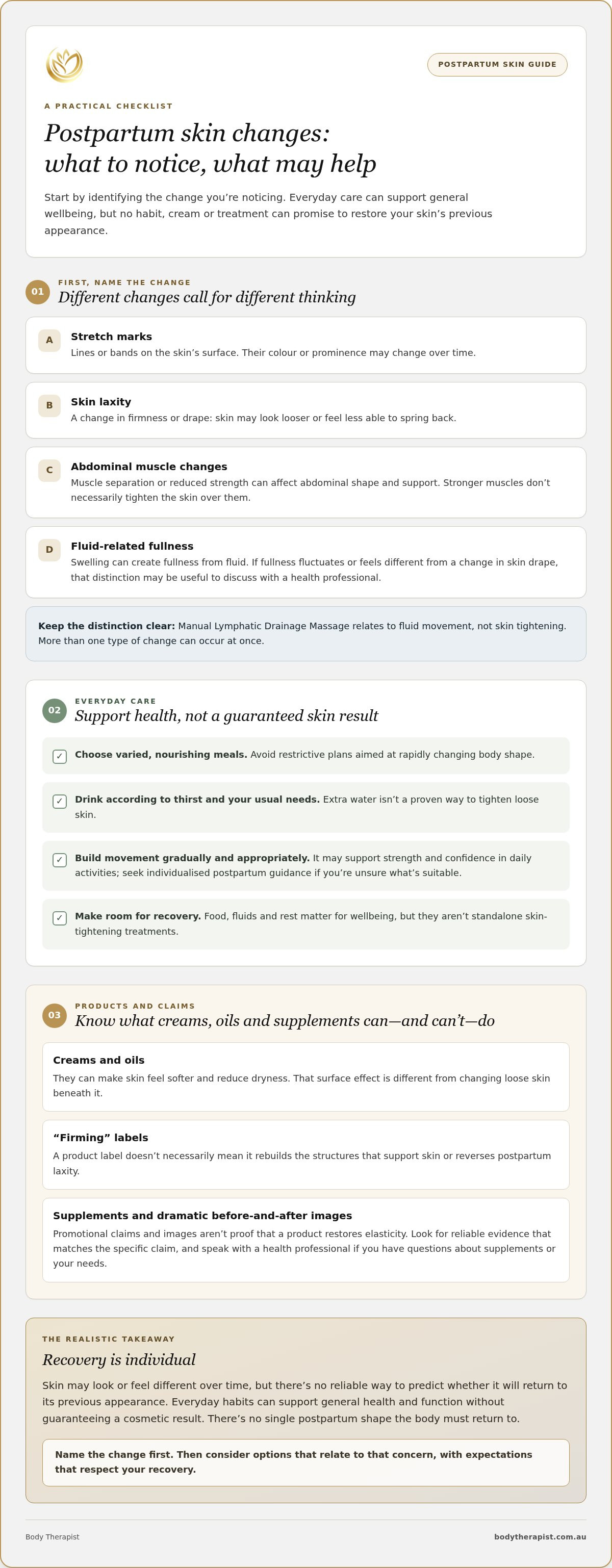
A practical way to assess postpartum skin changes
A clear description of what you’re noticing can help you decide what information or support may be useful. This isn’t a self-diagnosis. It’s a practical way to organise your observations and avoid treating skin, muscle and swelling concerns as though they were the same issue.
Describe the change. Is your main concern loose or less-firm skin, stretch marks or another surface-texture change, a feeling of fullness or swelling, or reduced abdominal strength? More than one may be present.
Note its location. Record where you notice it, such as the abdomen, hips or another area. Describe what you can see or feel instead of relying on a broad label such as “my body has changed”.
Identify what matters most to you. Is your priority comfort, how your skin feels, abdominal function or appearance? Your goal helps frame a useful conversation, but it doesn’t establish the cause or determine which approach is suitable.
Keep the focus on your wellbeing, not on meeting a particular body shape or appearance. There’s no single standard that postpartum skin or abdominal changes must match.
How can you identify what is bothering you most?
Try describing the concern in neutral terms: “the skin feels looser”, “I notice lines on the surface”, “this area feels fuller” or “I’m concerned about my abdominal strength”. These observations can help distinguish texture, laxity, possible swelling and functional concerns. Appearance alone can’t diagnose the cause or tell you which treatment, if any, is appropriate.
If you choose to track changes, use a simple, consistent method that feels comfortable. You might write a short note about what you notice and whether it affects movement or day-to-day comfort. Comparing observations over time may help you see whether something seems to be changing, but avoid setting a fixed deadline for recovery or expecting a particular result. You don’t need to monitor your body if doing so feels stressful.
When might professional guidance be useful?
Consider discussing changes with an appropriate health professional if you’re uncertain about what you’re noticing, if it’s persistent or concerning, or if you have pain or an unusual change. Skin appearance, swelling and abdominal rehabilitation are different concerns and may call for different kinds of assessment. Massage isn’t a way to tighten loose skin. For pregnancy-related comfort and therapeutic context, Body Therapist’s clinical Pregnancy Massage guide explains that service, not a treatment for postpartum skin laxity.
If you’d like to understand Body Therapist’s approach to postpartum body concerns, read about the tailored treatments. Identifying the concern you want addressed can make a conversation about how to improve skin elasticity after pregnancy more useful.
How Body Therapist approaches postpartum skin and body concerns
Postpartum body concerns can involve different things, from a change in skin firmness to questions about movement, comfort or recovery. Body Therapist offers RF Skin Tightening and individualised body treatments, with the approach shaped around each person’s needs rather than a promise of a particular result. A service may be one option to consider, but it can’t guarantee that skin will regain its previous elasticity or appearance.
What can an individualised treatment discussion cover?
A useful discussion starts with what you’ve noticed and what you’d like help with. You might describe a skin concern, ask about RF Skin Tightening or explain that your main priority is feeling stronger and more comfortable in daily movement. Being clear about your goal helps distinguish an aesthetic concern from a functional or health-related one, and keeps expectations grounded.
Body Therapist offers RF Skin Tightening as a non-surgical service. Its inclusion in an individualised plan doesn’t mean it will produce a specific change for every person. Suitability and expected outcomes depend on individual circumstances, so it’s important to recognise the limits of what a treatment can promise.
It’s also useful to separate skin appearance from concerns that may need a different kind of support. A question about abdominal function, for instance, isn’t the same as a concern about skin laxity. Body treatments can be considered in the context of your stated goals, but they shouldn’t be presented as a diagnosis or as a substitute for appropriate medical advice about a health concern.
Who provides Body Therapist treatments?
Lee Carnegie is a qualified remedial massage therapist, Dynamic Movement Therapist Level 1 and personal trainer. Lee has specific training in Manual Lymphatic Drainage and specialises in pregnancy and post-natal rehabilitation. This background informs an individualised approach while keeping the purpose of each service clear. Manual Lymphatic Drainage Massage relates to fluid-related concerns, not skin tightening. RF Skin Tightening is the relevant service for an aesthetic skin-tightening concern.
There isn’t a single answer to how to improve skin elasticity after pregnancy, and no treatment should be framed as a guaranteed return to your pre-pregnancy body. A measured discussion can help you clarify what matters to you, understand which service relates to your concern and keep expectations realistic. Your comfort, goals and the distinction between aesthetic and rehabilitation needs all matter.
Learn about Body Therapist services and the individualised approach to postpartum body concerns.
Choose a next step that feels right for you
Your next step doesn’t need to be a treatment. It might simply be getting clearer about the support you want or giving yourself more time before making a choice. Asking how to improve skin elasticity after pregnancy can open a useful conversation, but it doesn’t mean your body has to return to a particular shape. Your comfort and goals are valid starting points.
If you’re considering a non-surgical option, Body Therapist offers RF Skin Tightening alongside individualised services. Lee Carnegie is a qualified remedial massage therapist and Dynamic Movement Therapist Level 1. The approach takes your needs into account rather than promising a fixed result. A considered discussion can help you understand whether a service relates to your concern and what expectations are realistic.
Progress isn’t measured by how quickly your body changes. Making informed choices that support your wellbeing matters, too.
Frequently Asked Questions
Does postpartum loose skin go away on its own?
Postpartum loose skin may become less noticeable over time, but it doesn’t always disappear completely. The amount of change varies with factors such as how much the skin stretched and individual tissue characteristics. If you’re deciding whether to wait or explore options, focus on whether the change affects your comfort or wellbeing, rather than expecting a particular result. You can discuss persistent concerns with an appropriate health professional.
How long does it take for skin elasticity to improve after pregnancy?
There’s no single timeframe for postpartum skin to change. Some people notice gradual differences, while others find that looseness persists. A calendar deadline can create pressure without telling you what’s happening in your own body. If you’re tracking changes, compare occasional notes under similar conditions rather than checking repeatedly. If you’re concerned about how your skin is changing, a health professional can help you decide what assessment is appropriate.
Can breastfeeding affect skin elasticity after pregnancy?
Breastfeeding isn’t a reliable predictor of whether abdominal skin will tighten or remain loose. Individual postpartum changes can occur alongside breastfeeding, but that doesn’t establish that feeding itself is causing a change in skin elasticity. If you’re considering supplements or topical products while breastfeeding, discuss them with a health professional or pharmacist, particularly if the ingredients or safety information are unclear. Avoid stopping breastfeeding solely to try to change skin appearance.
Are stretch marks the same as loose skin after pregnancy?
No. Stretch marks are visible lines in the skin, while loose skin refers to a change in how firm or closely the skin sits. They can occur together, but one doesn’t tell you how much of the other is present. Someone may have stretch marks without substantial looseness, or notice laxity without prominent marks. The colour and visibility of stretch marks may change, so a photograph at one point doesn’t predict how either will look later.
Can abdominal muscle separation make the stomach look loose?
Do collagen supplements improve skin elasticity after pregnancy?
There isn’t enough reliable evidence to say collagen supplements reverse postpartum loose skin or restore its elasticity. A supplement marketed for skin may not have evidence for that specific outcome, so check the claim and ingredient information rather than relying on promotional images. If you’re breastfeeding, taking medication or managing a health condition, ask a GP or pharmacist before starting a supplement. Food-based nutrition can support general health, but it isn’t a guaranteed skin-tightening treatment.
Can a caesarean scar affect the appearance of abdominal skin?
A caesarean scar can influence the appearance of nearby tissue. For some people, the skin around the scar may look uneven or seem pulled. That doesn’t necessarily mean the whole abdomen has reduced elasticity, and the scar itself isn’t the same as loose skin. Healing and appearance vary. If the scar is uncomfortable, feels restricted or is causing concern, ask a health professional to assess it and discuss suitable care.
Comments