

Fat Cavitation Long-Term Effects and Lasting Results

Long-term fat cavitation side effects can include lingering skin laxity or uneven contours; tissue damage and fat redistribution are described as rare risks. Mild redness, swelling, bruising or tenderness may fade within hours or a few days. More noticeable changes may take 6 to 12 weeks from the first session to appear.
It’s understandable to look beyond the immediate recovery and wonder whether results will last or treatment could cause unexpected changes. The answer depends partly on how your body responds and how your weight changes over time.
This guide explains how ultrasonic cavitation works, what it may achieve, which short-term effects can occur and what is known about longer-term risks. It also covers what can influence lasting results, helping you weigh the potential benefits and limitations.
Table of Contents
How Effective is Ultrasonic Cavitation for Fat Reduction?
Ultrasonic cavitation is a body-sculpting treatment for localised fat, not a stand-alone weight-loss method. More noticeable changes may emerge 6 to 12 weeks after the first session, so an immediate change isn’t the only measure of effectiveness.
A session commonly takes 40 to 60 minutes. People may feel warmth or mild tingling as the applicator moves over the skin; intense discomfort isn’t an expected treatment sensation. There’s generally no downtime, and people can return to their day afterwards. Results depend on the area treated, the person’s starting point and consistency across sessions.
Frequency varies between treatment plans. Sessions may be spaced three days to a week apart, while some plans recommend a course of 6 to 12 sessions. These figures describe different approaches, not a requirement for everyone. After treatment, drink water and follow the practitioner’s care instructions. One spa recommends at least 2 litres of water before and after sessions, but hydration needs vary. Avoid alcohol for at least 24 hours afterwards; advice also recommends avoiding it for 48 hours before treatment. Don’t use cavitation instead of exercise or weight management.
Suitability matters. A stable BMI of 18.5 to 24.9 kg/m² is often described as suitable, while treatment isn’t recommended when skinfold thickness is below 2 cm. It’s also not recommended during pregnancy or breastfeeding, with a pacemaker or metal implant in the treatment area, or with blood-clotting disorders or anticoagulant use. Other potential risk factors include severe liver or kidney disease, poor circulation, active skin problems, immune disorders and some medicines. Full medical history helps identify these concerns before treatment.
In Australia, device oversight and practitioner requirements depend on the device and how the service is delivered, so there isn’t one rule for every treatment. A device’s availability alone doesn’t establish whether it is suitable for you. After treatment, stay hydrated and follow the specific aftercare advice provided. Regular exercise supports general health, but cavitation doesn’t replace it.
How Does Ultrasonic Cavitation Work to Remove Fat?
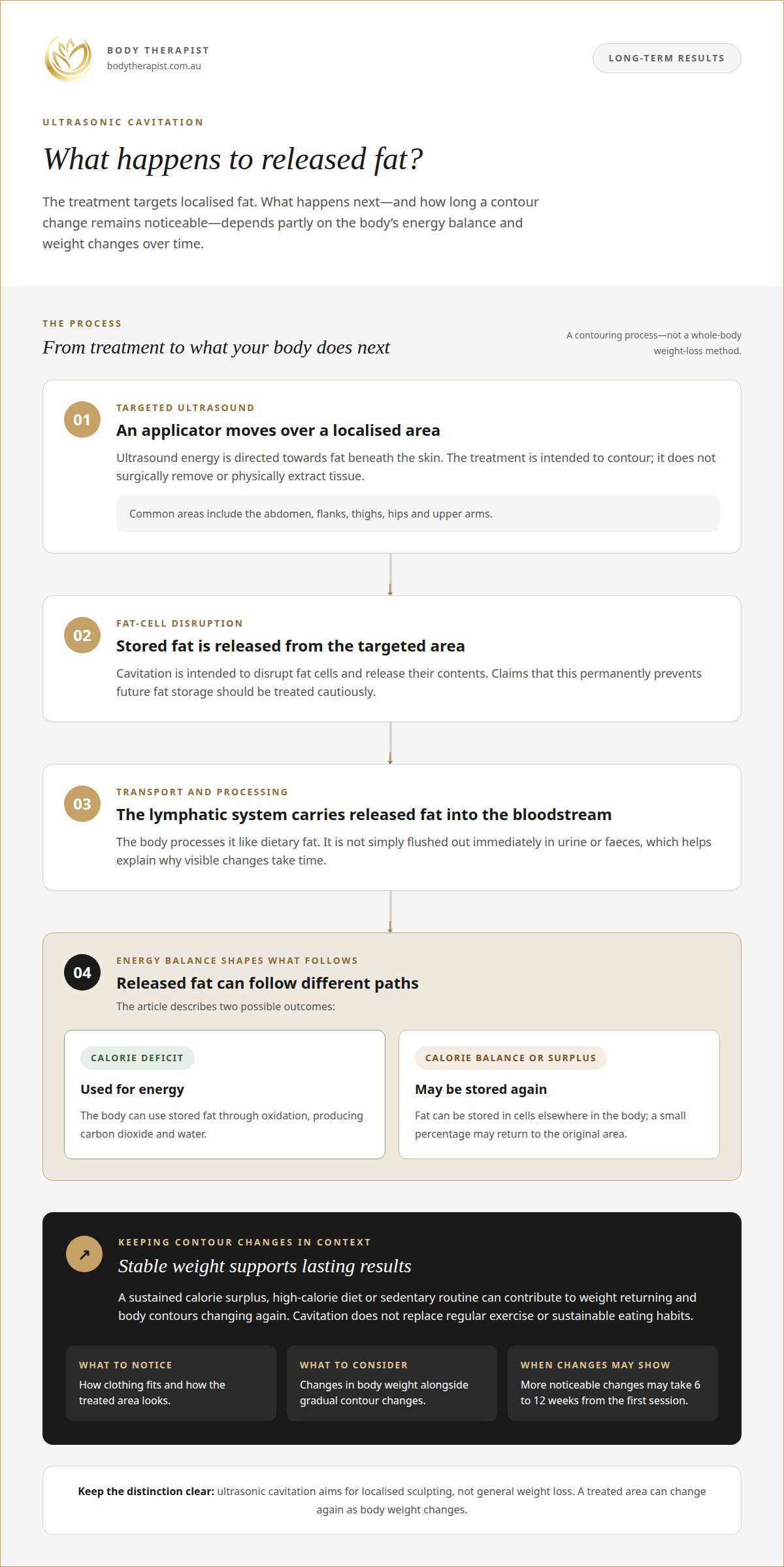
Fat cavitation is a non-surgical body-contouring treatment that uses ultrasound over a targeted area. It is intended to disrupt fat cells, releasing their contents for the body to process.
Ultrasound cavitation process
During ultrasound cavitation, an applicator moves over the skin above a localised area, directing ultrasound energy towards fat beneath the skin. The treatment is intended to contour, not surgically remove tissue. Common treatment areas include the abdomen, flanks, thighs, hips and upper arms. Cavitation targets localised fat; it is not a whole-body weight-loss treatment.
After treatment, the lymphatic system transports released fat from the treated area into the bloodstream, where the body processes it like dietary fat. It isn’t simply flushed out immediately in urine or faeces. This helps explain why visible changes may take time rather than appearing as soon as a session ends.
Fat cell breakdown claims
Cavitation is intended to disrupt fat cells, releasing stored fat from the targeted area. Unlike surgical fat removal, it does not physically extract tissue. This distinction matters when assessing claims: ultrasound cavitation is a non-surgical contouring method, not a substitute for exercise or a weight-loss treatment on its own.
Claims about whether cavitation permanently destroys fat cells should be treated cautiously. However, this doesn’t protect a treated area from future fat storage. If energy intake exceeds what the body uses, fat can be stored in existing cells elsewhere, and some may return to the original area. Long-term changes therefore depend partly on maintaining weight, not just on the treatment.
For a clearer understanding of how the process applies to your goals, explore ultrasonic fat cavitation.
Long-term results and weight maintenance
Ultrasonic cavitation is intended to reduce localised fat, not produce general weight loss. Although treatment is described as disrupting fat cells that don’t regenerate, the visible change is not immune to weight gain. Fat reduction may remain noticeable when weight is maintained, while a sustained calorie surplus can change body contours again.
What happens to released fat depends partly on the body’s energy balance. The lymphatic system transports it from the treated area into the bloodstream, where it is processed like dietary fat. During a calorie deficit, the body uses stored fat for energy through oxidation, producing carbon dioxide and water. This process relates to lipolysis, the breakdown of stored fat. Released fat isn’t directly passed into urine or faeces.
In calorie balance or surplus, released fat can instead be stored in fat cells elsewhere in the body. A small percentage can return to the original area. This helps explain why a treated area can change again, even after cavitation has affected cells there. A high-calorie diet and a sedentary routine can contribute to weight returning. Treatment doesn’t replace regular exercise or sustainable eating habits.
Long-term outcomes involve more than the initial contour. Maintaining a stable weight supports lasting results, while body-weight changes can affect surrounding tissue and the appearance of the treated area. Cavitation doesn’t physically extract tissue like invasive fat-removal procedures. Its purpose is localised sculpting, so distinguish a change in contour from a change on the scales. Over time, notice how clothing fits and how the treated area looks, alongside weight trends. These observations can help put gradual changes in context and show whether weight maintenance is supporting the intended result.
Immediate side effects after fat cavitation
Mild effects after fat cavitation can include redness, swelling, bruising or tenderness, and usually fade within a few hours to a few days. Temporary skin symptoms are different from persistent contour changes, which deserve separate attention.
Redness may appear across the treated area shortly after the procedure. Mild bruising or tenderness can make the skin sensitive to pressure, while swelling may cause brief puffiness around localised fat deposits. These effects are generally short-lived. Non-surgical doesn’t mean risk-free.
Some people also report excessive thirst or nausea after treatment. Note when symptoms begin and whether they ease, and follow the aftercare advice, including staying hydrated. Don’t assume worsening symptoms are routine. Understanding fat cavitation side effects over the long term means distinguishing brief discomfort from changes that persist.
Seek medical advice promptly for severe pain, ongoing swelling, possible signs of infection or an allergic reaction after the procedure. Increasing redness, warmth or discharge at the treated area can indicate a problem. Rapidly worsening symptoms need particular attention. A healthcare professional can assess the symptoms and advise on appropriate care.
Suitability screening helps identify potential risks before treatment. Treatment may not be recommended during pregnancy or breastfeeding, or with a pacemaker, metal implants in the treatment area, blood-clotting disorders or anticoagulant medicines. Poor circulation, active skin problems, immune disorders, severe liver or kidney disease and some medicines may also affect risk. Disclose your medical history and medicines before treatment, and consult a health professional about relevant conditions.
Longer-lasting skin laxity or uneven contours are not the same as brief redness or tenderness. If a change persists beyond the usual short recovery period, arrange a medical assessment rather than assuming it will resolve. This distinction is central to understanding fat cavitation side effects that continue over the long term. Your overall health and lifestyle also matter when considering body-contouring procedures.
If you’re considering treatment, book an ultrasonic fat cavitation appointment to discuss suitability and expected aftercare.
Body Therapist: Ultrasonic Fat Cavitation
Body Therapist provides Ultrasonic Fat Cavitation for people considering non-surgical treatment for localised body contouring. It may suit someone seeking contouring rather than a stand-alone weight-loss approach. Discussing your goals, treatment area and health history can help establish whether it is appropriate for you.
Results and recovery vary, so understand the possible short-term effects and longer-term contour changes before deciding. Body Therapist also offers Manual Lymphatic Drainage Massage, Lymphedema Therapy and Remedial Massage for distinct therapeutic needs. These are separate services, not a guarantee of cavitation results.
To discuss Ultrasonic Fat Cavitation and your treatment goals, contact Body Therapist.
Make your next step an informed one
Before choosing a body-contouring approach, consider what you want to change and how it fits your broader health goals. The long-term side effects of fat cavitation are one part of the decision; your medical history, expectations and ability to maintain results also matter. A considered conversation can help clarify whether treatment aligns with your priorities.
Mention any health conditions, medicines or previous reactions that could affect your suitability for treatment. You can also discuss the changes you hope to see and what would count as a worthwhile outcome for you. Your suitability and likely response depend on individual factors, so a personalised discussion is more useful than relying on general claims about results.
For a conversation about your options, contact Body Therapist. Take the next step at your own pace, with clear information to guide your decision.
Frequently Asked Questions
Understanding the Science: How Does Fat Cavitation Work?
Fat cavitation uses ultrasound energy over a targeted area to affect fat beneath the skin. The treatment is intended to disrupt fat cells and release their contents for the body to process. It is a contouring approach, not a way to surgically remove fat tissue. For example, treatment might focus on the abdomen rather than aim to reduce weight throughout the body.
Who Is Most at Risk of the Treatment Side Effects?
Some health conditions and devices raise suitability concerns. Treatment isn’t recommended during pregnancy or breastfeeding, or with a pacemaker, metal implant in the treatment area, blood-clotting disorder or anticoagulant use. Severe liver or kidney disease, poor circulation, immune disorders, active skin problems and some medicines can also affect risk. Share your medical history and current medicines before treatment.
Do the Results Last?
Results can last when weight is maintained, but they can change if body weight increases. Fat cells affected by treatment aren’t protected from future fat storage, and some released fat may return to the original area. For example, a change in waist contour may become less apparent alongside overall weight gain. Cavitation is intended for localised contouring, not ongoing weight control.
How Does It Work?
An applicator delivers ultrasound over a selected body area. The intended effect is to disrupt fat cells, after which the lymphatic system transports released fat into the bloodstream for the body to process like dietary fat. This differs from surgical fat removal: treatment doesn’t physically extract tissue and shouldn’t replace exercise or broader weight-management measures.
How Is It Possible to Remove Solid Fat Through Urine?
Solid fat isn’t directly removed through urine after cavitation. The body processes released fat rather than passing it intact into urine or faeces. When a person is in a calorie deficit, fat can be oxidised for energy, producing carbon dioxide that is breathed out and water that is urinated. Urine is one route for water, not a direct outlet for solid fat.
What Are the Short-Term Side Effects of Fat Cavitation?
Short-term effects can include redness, swelling, bruising, tenderness, thirst or nausea. Mild skin symptoms generally settle within hours or a few days. Severe pain, ongoing swelling, signs of infection such as increasing redness or discharge, or an allergic reaction need prompt medical attention. Contact a healthcare professional about these symptoms rather than treating them as routine recovery effects.

Comments