

Cupping Therapy for Athletes: What It Does and What Research Says

The suction is real; a reliable performance boost isn’t established. Cupping therapy for athletes uses cups to draw the skin partially upwards, and it’s sometimes used in sports physical therapy to help with sore, tired muscles. There’s little research establishing whether cupping works, so it’s best viewed as a possible way to manage discomfort, not a proven route to better performance.
The circular marks can look dramatic, which may make the treatment seem more powerful than the evidence suggests. They typically heal on their own within 7 to 10 days, and the visible effect doesn’t show whether an athlete’s recovery or performance has changed.
This article explains how cupping works, how therapists may use it in physical therapy, and what athlete-specific research can and can’t tell us about its effects. You’ll also learn why cupping marks are familiar in elite sport, how expectations may shape perceived relief, and how to consider cupping alongside other recovery approaches.
Table of Contents
How Effective Is Cupping?
Research has not established whether cupping works, or whether it improves athletic performance or speeds recovery. Athletes weighing possible benefits should also consider that suction can leave temporary marks on the skin.
Proposed Effects of Cupping
Cupping is proposed to increase blood supply to a targeted area and promote blood flow. It is also used in the hope of easing pain in areas such as the back, neck, knee or shoulder. These possible effects may interest athletes managing muscle soreness, but a proposed mechanism does not prove that cupping improves function or recovery.
Expectations may also influence perceived relief. Placebo effects can occur with cupping and similar recovery practices, so feeling better after treatment does not by itself show that suction caused a physiological change. Focus on a practical outcome, such as whether a sore shoulder feels more comfortable during movement, rather than treating a visible mark as proof of effectiveness.
Athletic Performance and Recovery
Cupping has not been established as a way to improve athletic performance or speed recovery. It would be difficult to study its physiological effects on Olympic athletes’ performance, where any change might be minimal. This makes it hard to distinguish a treatment effect from normal variations in training, rest and how an athlete feels.
For athletes considering cupping, the practical distinction is between possible short-term relief and a proven performance gain. If you use it for muscle soreness, assess comfort and movement in context. Do not assume treatment has restored muscle function or improved competition results. Consult a specialist experienced in cupping, and avoid trying it for the first time on competition day.
Cupping Marks and Skin Response
Suction pulls the skin partially into a cup and can cause bruising, leaving round marks. These marks are a visible skin response, not evidence that an athlete’s muscles have recovered faster or that performance has improved. They typically heal on their own within 7 to 10 days.
The time marks take to fade may matter when planning treatment around training, competition or events where they could be visible. An athlete competing within a few days, for example, may still have visible marks. Consider this when choosing timing, and discuss the treatment area and possible skin response with a cupping specialist before a session.
What Is Cupping Therapy?
Cupping uses suction to draw the skin partly into a cup and has roots in traditional Chinese medicine. Understanding its proposed benefits and the limits of the evidence helps athletes assess what cupping therapy for athletes may involve, without assuming that tradition proves effectiveness.
Potential Benefits and Evidence Limitations
Cupping is theorised to stimulate the body’s natural energy, known as qi, and practitioners propose benefits such as symptom relief. Its history is long: cupping appears in a medical textbook dating from 1550 B.C., while records indicate practice in ancient Egypt as early as 1500 B.C. Historical use, however, doesn’t establish effectiveness.
Research has not established whether cupping works. For athletes considering cupping therapy for athletes, this matters when weighing possible benefits against the evidence: a traditional explanation or proposed effect is not proof of a reliable outcome. Treat cupping as an approach to discuss with a specialist, rather than assuming its history shows that it improves sport performance or recovery.
Cupping and Potential Symptoms
Cupping is used in relation to a range of symptoms, including asthma and other breathing issues, carpal tunnel syndrome, headaches and migraines. These involve different body systems, so they should not be treated as interchangeable conditions or as evidence that one treatment addresses their underlying causes.
Athletes considering cupping should consult a specialist experienced in the practice. Ask how the proposed approach relates to your specific symptom, such as wrist discomfort associated with carpal tunnel syndrome, and what response the therapist will monitor. This discussion clarifies the treatment’s purpose without assuming that symptom relief is established.
With glass cups, the air inside is heated before the cup is placed on the skin. This differs from methods that create suction mechanically, but both draw skin into the cup. Knowing which method is used helps you understand what to expect during a session and discuss whether it suits the symptom being addressed.
Athlete-specific research findings
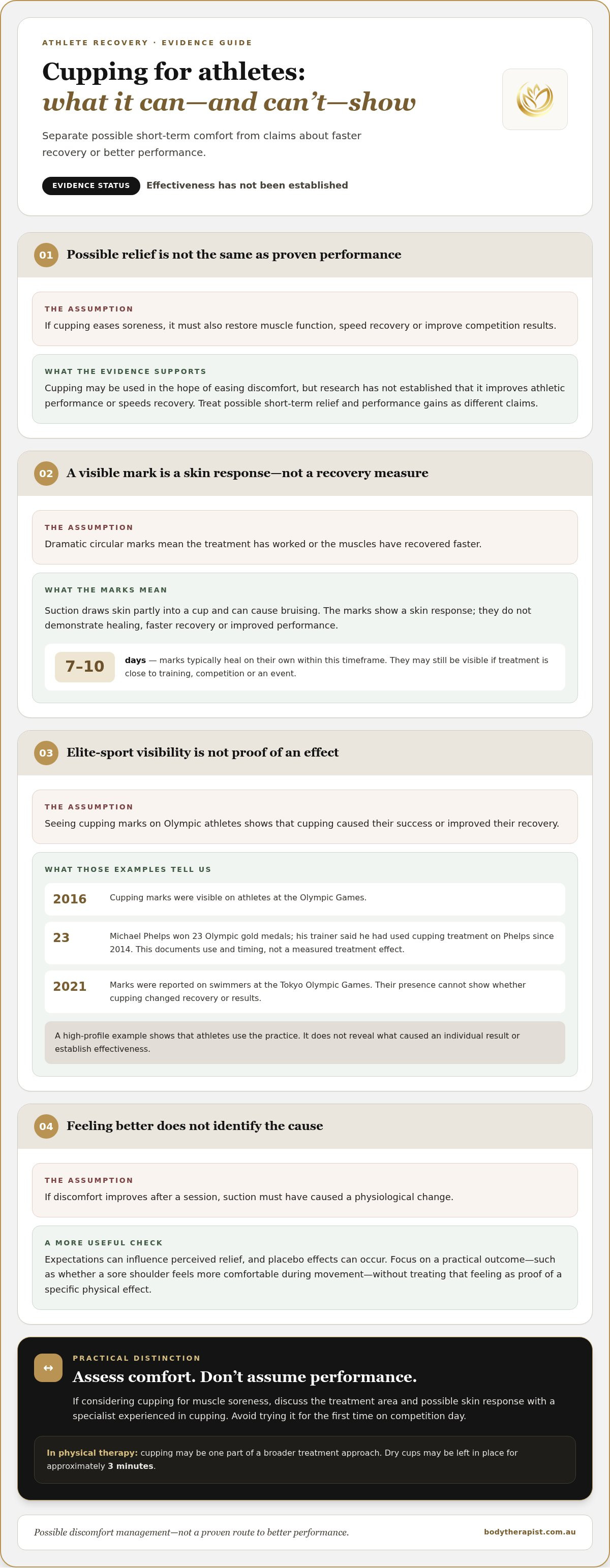
Elite swimming brought cupping into public view through Olympic athletes. At the 2016 Olympic Games, cupping marks were visible on athletes. Michael Phelps, who won 23 Olympic gold medals, became a prominent example. His trainer said he had used cupping treatment on Phelps since 2014. Those details document use and visibility, not a measured performance outcome.
A prominent athlete can demonstrate that a practice is used in elite sport, but their results cannot show what caused performance. Phelps’s 23 gold medals reflect a competitive career; the trainer’s account supplies treatment timing, not a comparison with training without cupping. For readers, that difference separates a public example from athlete-specific evidence testing recovery, pain or performance under controlled conditions. The reported history offers context, not a direct estimate of treatment effect.
Cupping marks were reported on swimmers at the 2021 Olympic Games in Tokyo. Seeing marks on competitors can establish that athletes used or received treatment around the Games; it cannot show whether cupping changed recovery or results. An image also says nothing about an athlete’s baseline soreness, training load, other recovery methods or expectations. Those details matter when interpreting performance changes rather than inferring benefit from appearance.
To assess a claim about athletes, consider the outcome being measured. A study of post-training soreness answers a different question from one measuring competition performance. For example, a swimmer feeling more comfortable after treatment does not, by itself, establish a faster race time. Cupping is visible in sport, including at the Olympics, but athlete-specific findings do not establish a performance effect. Keep these distinctions in mind when weighing an anecdote against evidence about recovery or athletic results.
Cupping in physical therapy
In physical therapy, cupping is a suction-based technique that may be used alongside other approaches. Some therapists leave dry cups in place for approximately three minutes before removing them. This describes one application, not a complete rehabilitation plan. Cupping’s role depends on the treatment goal, such as addressing local muscle soreness while considering how the athlete moves and functions.
Cupping and sports massage apply contact differently. Massage uses a therapist’s hands to apply pressure and work through soft tissue, while cupping uses suction from a cup. For athletes, the practical question is which approach fits the session’s focus. A runner with a tight-feeling calf, or a martial artist training in high-impact disciplines such as those offered at flinntkd.com.au, could discuss hands-on work, cupping or a combination as part of their care.
Physiotherapy is broader than any single hands-on method. It can assess movement and function, then select rehabilitation strategies suited to the athlete’s needs. Cupping therapy for athletes is one possible technique in that wider context, not a replacement for assessment or a structured return-to-training plan. A cup applies suction; rehabilitation can address how an athlete moves and loads an affected area.
Recovery methods serve different purposes. Rest changes training load, movement-based rehabilitation focuses on function, and massage applies manual pressure. Cupping adds another physical stimulus, but there is little basis for ranking it above these approaches. Compare methods according to the problem being addressed, rather than assuming one technique suits every training situation.
Before a session, discuss the intended area and outcome. Clarify whether the goal is local soreness relief or more comfortable movement during a squat, then consider how the area responds afterwards. An approximately three-minute dry-cupping application describes a technique, not a measure of recovery. View cupping as one component of considered physical therapy, rather than a stand-alone performance strategy.
Body Therapist: Manual Lymphatic Drainage Massage
Body Therapist’s Manual Lymphatic Drainage Massage is a separate option for people seeking lymphatic drainage support, not an established way to improve athletic performance. Cupping and lymphatic drainage massage are distinct approaches, so the right choice depends on the concern you want addressed.
For musculoskeletal discomfort, Remedial Massage may be relevant. Body Therapist also offers Lymphedema Therapy for lymphoedema-related needs. These services address different concerns, so let the purpose of your treatment guide your next step.
Contact Body Therapist to discuss which of these services best suits your needs.
Choose care around your next goal
Before choosing cupping therapy for athletes, identify the outcome you want from treatment. Is your priority easing discomfort in a specific area, getting lymphatic care, or addressing broader muscle tension? A clear goal makes it easier to discuss relevant options and assess whether they meet your needs.
Body Therapist offers Manual Lymphatic Drainage Massage, Lymphedema Therapy and Remedial Massage for different therapeutic needs. These are distinct services, not interchangeable forms of cupping. Explain what you want help with to guide a discussion about which approach may suit your concern.
Keep your next step practical: describe the area, the effect it has on movement or daily activity, and what you hope to change. That gives the discussion a useful focus without treating any single technique as a shortcut to athletic progress. If you’d like to explore the available care options, contact Body Therapist. A considered choice can help you move forward with greater clarity and confidence.
Frequently Asked Questions
How Does Cupping Work?
A cup creates suction that draws the skin partly into it. With glass cups, the air inside is heated before the cup touches the skin; dry cups may also be left in place briefly. For example, a therapist might place a cup on an area of muscle discomfort and then remove it. Suction is the method, not proof that an underlying injury has been treated.
What Are the Benefits of Cupping?
Proposed benefits include increased blood supply to a targeted area and possible pain relief. An athlete with a sore shoulder, for instance, may consider cupping as one approach to discomfort. Research has not established whether cupping works, so distinguish a hoped-for effect from a demonstrated outcome. A clear treatment goal, such as easing discomfort during a movement, makes the choice easier to assess.
What is cupping therapy and how is it used by athletes?
Cupping therapy uses suction cups on the skin, and athletes may try it to address sore, tired muscles. The therapist places cups on the chosen area, either leaving them in place or using a moving technique. The athlete’s goal matters: seeking temporary comfort is different from expecting treatment to change performance or resolve an injury.
What does scientific research say about cupping for muscle soreness and sports injuries?
Research establishing cupping’s effects remains limited, so it does not provide a dependable basis for claiming faster healing of sports injuries. Muscle soreness and injury recovery are different outcomes: feeling more comfortable after a session does not show that damaged tissue has healed. For example, a runner returning to training should not treat cupping alone as evidence that an injury is ready for loading.
What are the risks and side effects of cupping therapy for athletes?
Cupping can cause bruising and leave visible circular marks. These marks generally heal on their own within 7 to 10 days, which may matter if an athlete has an event or competition approaching. Consider the treatment timing and the area being treated, and discuss the expected skin response with a specialist before a session. The marks alone don’t measure recovery or treatment success.
Is cupping safe, and who should avoid it?
Cupping can cause bruising, so it is not risk-free. Avoid trying it for the first time on competition day, when an unfamiliar response could affect your plans. If you are considering treatment, consult a specialist who understands cupping and explain your training schedule and goals. This discussion can help clarify the method and its timing for you.
Comments